
Page last updated: 27 May 2025
New Zealand is arguably one of the best places in the world to travel by campervan, with abundant scenic views, good roads and plenty of campgrounds.
RV Camping in New Zealand
How many people go RV camping in New Zealand each year?
It’s estimated that around 200,000 people go RV camping in New Zealand each year.
This is based on a combination of domestic NZMCA members (registered RV owners) and international visitors renting a campervan or motorhome.
- In 2024, there were approximately 117,000 domestic RV campers in New Zealand (NZMCA members), a 46% increase from 2010 when there were around 80,000 according to MBIE.
- International campervan rental visitors exceeded 150k annually in the last year before the pandemic (2019). While numbers have been gradually recovering since the end of travel restrictions in 2022, updated international campervan rental figures are not yet available.
| Year | International RV Campers | Domestic RV Campers |
|---|---|---|
| 2010 | N/A | 50 K |
| 2011 | 53.7 K | N/A |
| 2013 | 54 K | N/A |
| 2015 | 75 K | N/A |
| 2018 | 123 K | 80 K |
| 2019 | 154 K | 90 K |
| 2020 | N/A | 100 K |
| 2021 | N/A | 105 K |
| 2022 | N/A | 110 K |
| 2023 | N/A | 115 K |
| 2024 | N/A | 117 K |
How popular is RV camping in New Zealand?
- Holiday parks and campgrounds (where RVers stay) account for over 30% of all commercial guest nights in New Zealand.
- There were 9.87 million holiday park guest nights in 2024, the highest recorded number, showing market recovery.
- International campervan and motorhome tourists are more engaged than the average tourist, visiting 6.8 regions on average per trip.
RV Camping Statistics and Spending Trends
How much do RV campers spend on average?
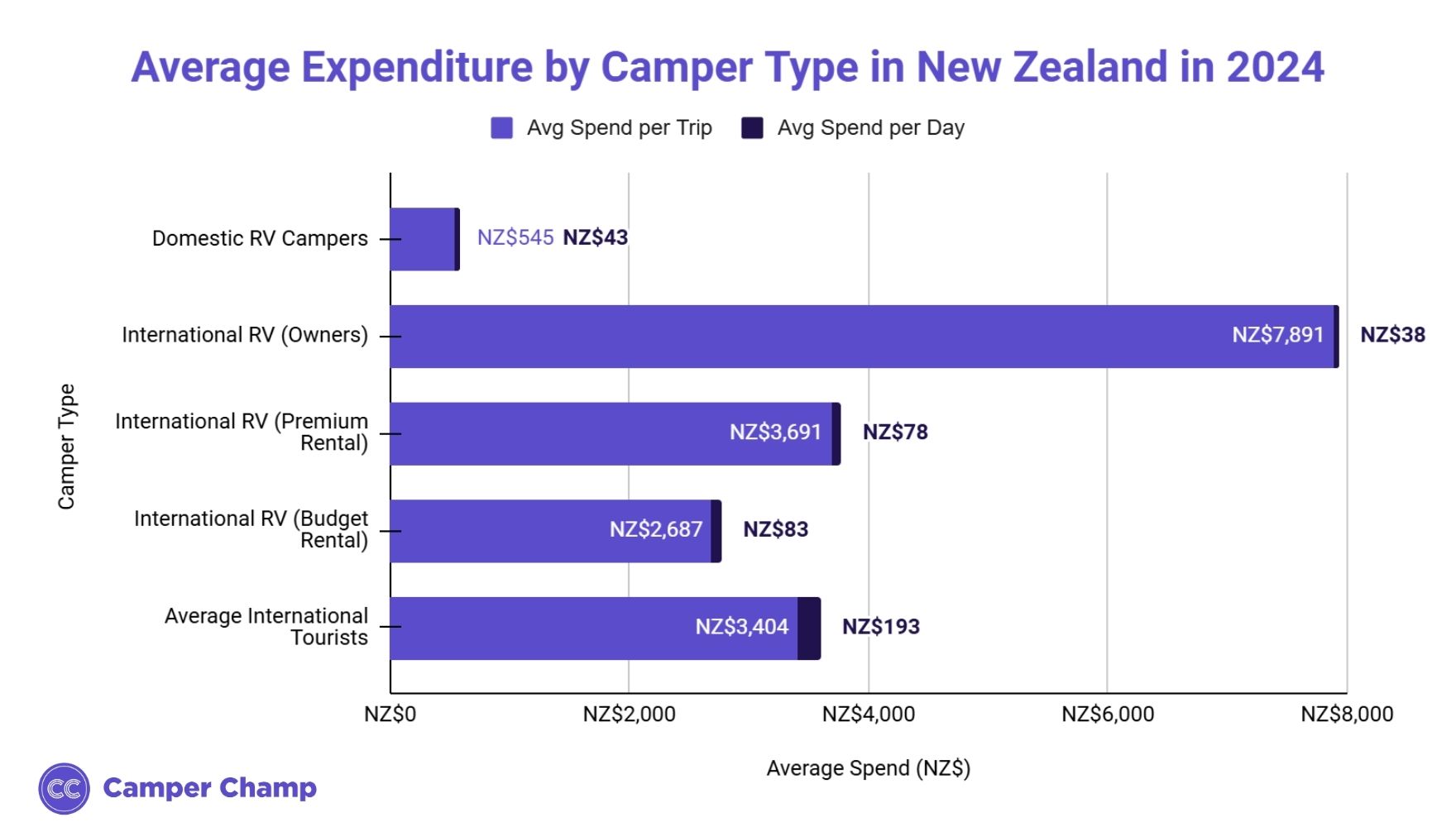
RV campers in New Zealand spent around NZ$545 per trip (NZ$43 per day) in 2024.
- International RV owners (who purchased their vehicles) spent NZ$7,891 per trip.
- International budget campervan renters spent around NZ$2,687 per trip.
- International RV campers renting premium motorhomes spent around NZ$3,691 per trip (NZ$78 per day).
What is the economic impact of RV camping in New Zealand?
- Annual Spend: RV and campervan tourists spent NZ$1.1 billion to NZ$1.3 billion annually from 2022 to 2024. The market bounced back to pre-pandemic levels by 2023.
- GDP: The sector contributes NZ$450 to over NZ$500 million per year in direct value-added GDP, a significant chunk of regional tourism income.
- Jobs: Supports thousands of direct and indirect jobs in holiday parks, vehicle rentals and regional service businesses.
- Regional Spread: RV tourists are spread across New Zealand. International tourists spend 6.8 regions per trip, with tourism revenue helping remote and rural communities.
- Domestic vs International: The majority of RV travel was made up of domestic tourists during COVID-19. International tourists contributed 35-40% of total campervan yearly spending in 2023-2024.
How do RV costs compare to traditional travel in New Zealand?
- RV travel is 48% less expensive than traditional travel. Savings are due to fewer accommodations and self-catering costs according to NZMCA.
- Traditional tourists spend NZ$193 per day. Campervan travellers spend NZ$38 to NZ$83 per day.
RV Camping Demographic
Age Distribution
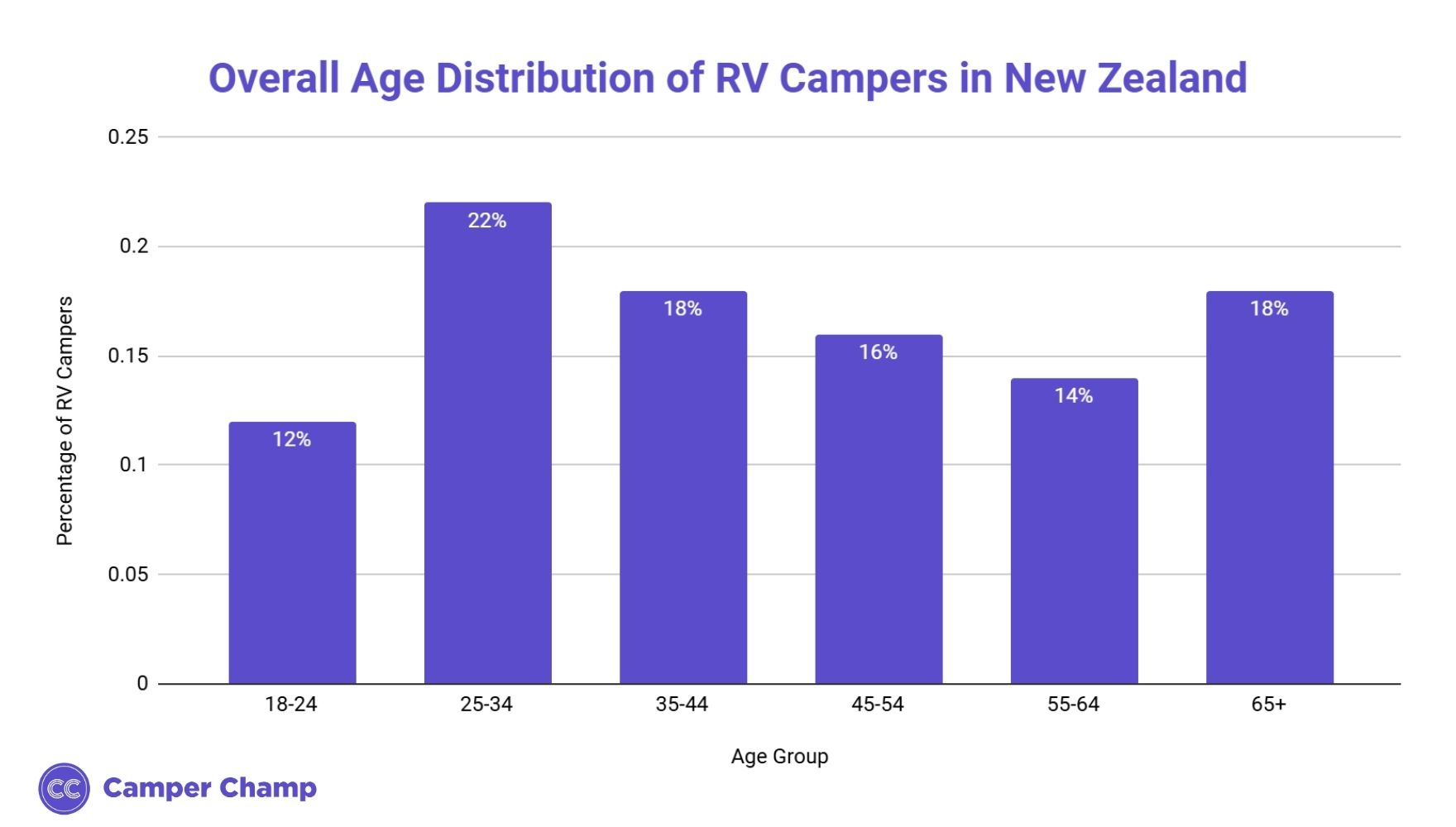
Domestic RV campers are older, with an average age of 63 years according to MBIE.
- International RV tourists are younger:
- Budget RV travellers: Average age 26 years
- Budget RV rental travellers: Average age 32 years
- Premium RV rental travellers: Average age 42 years
Gender Distribution
- 55% of RV campers are male and 45% are female according to 2024 data. Although the trend leans slightly more toward males, RV travel is popular among both genders.
Income Levels
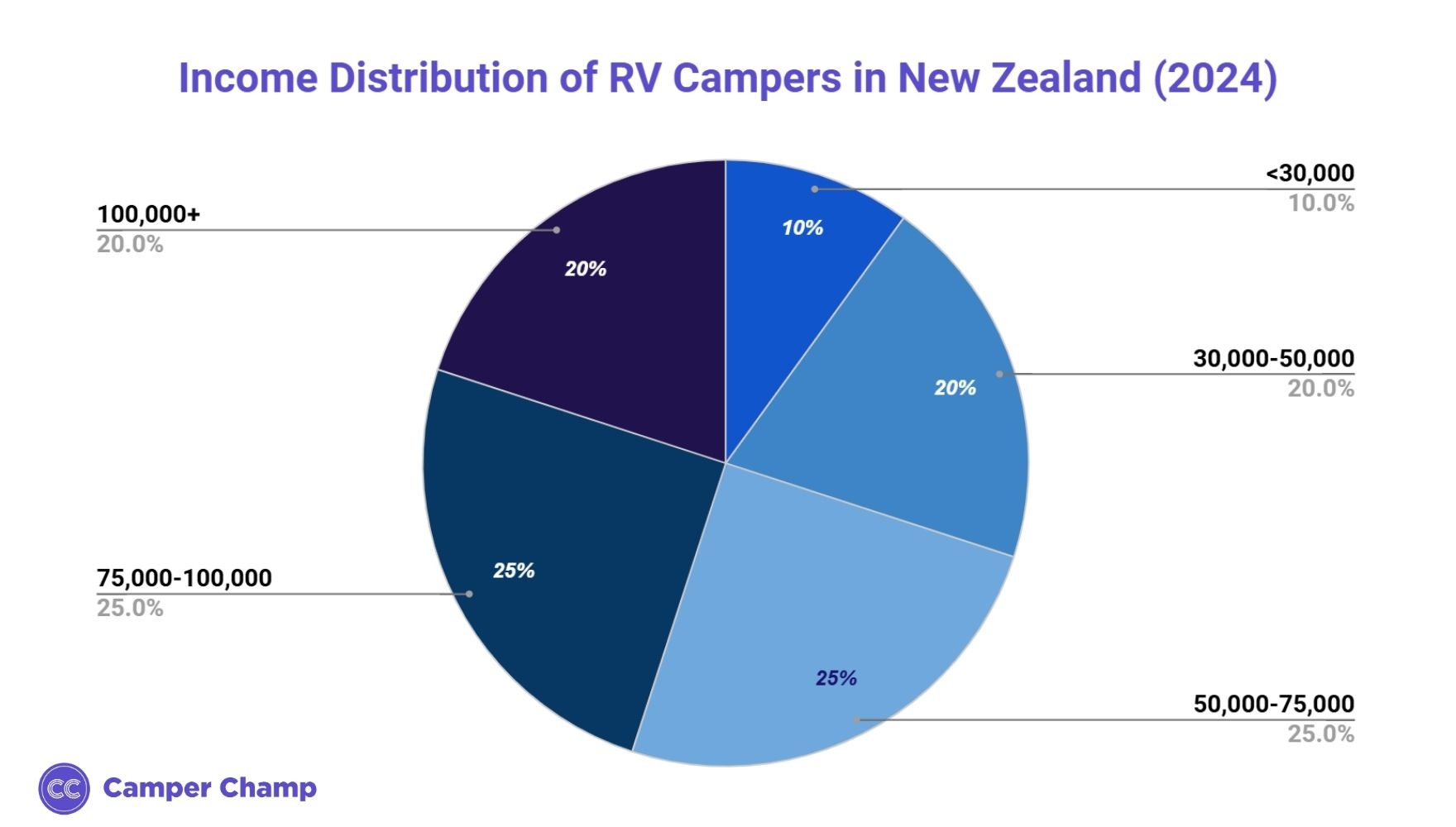
25% of RV campers earned NZ$50,000-75,000 per year and 25% earned NZ$75,000-100,000 per year in 2024.
- 20% of RV travellers earn above NZ$100,000 annually.
- 20% earn NZ$30,000-50,000 annually.
- 10% earn below NZ$30,000 annually.
Travel Preferences
60% of RV travellers prefer freedom camping while 40% of campers prefer paid holiday parks.
In terms of trip length:
- 50% of RV travellers choose short trips (less than 200 kilometres).
- 25% prefer longer trips (exceeding 200 kilometres).
- 25% prefer extended stays (lasting multiple weeks).
Below is a table summarizing different aspects of the travel preferences of RV campers:
| Travel Type | Percentage of RV Campers |
|---|---|
| Short Trips (<200 km) | 50% |
| Long Trips (200+ km) | 25% |
| Extended Stay (Multiple Weeks) | 25% |
| Freedom Camping | 60% |
| Paid Holiday Parks | 40% |
Top RV Camping Destinations in New Zealand
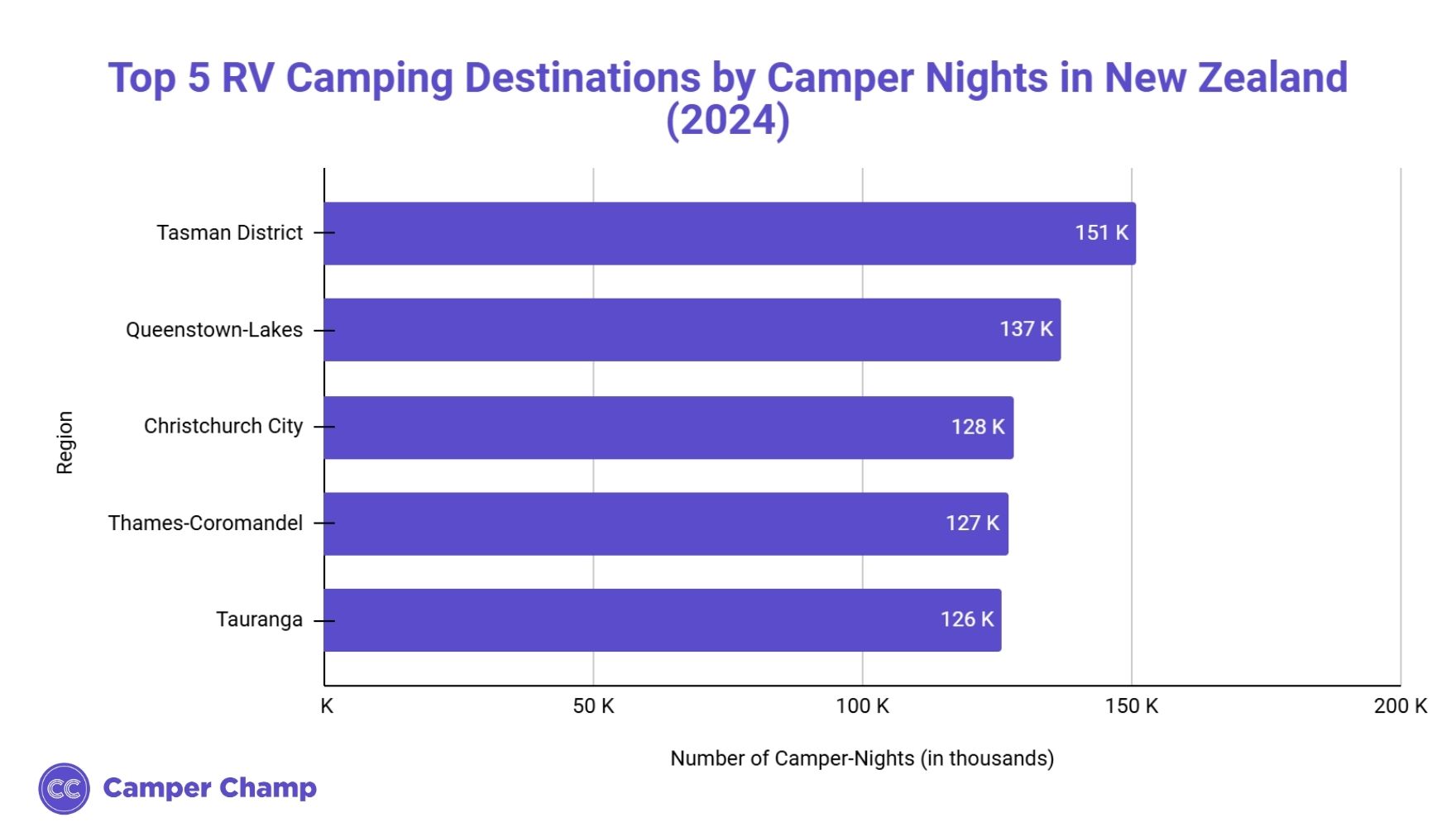
- The Tasman District recorded 151,000 camper nights in 2024.
- Queenstown – Lakes recorded 137,000 camper nights.
- Christchurch City recorded 128,000 camper nights.
- Thames-Coromandel recorded 127,000 camper nights.
- Tauranga recorded 126,000 camper nights.
New Zealand Travel Resources
- Auckland RV Rental
- Christchurch RV Rental
- New Zealand RV Rental
- Queenstown RV Rental
- Wellington RV Rental
How safe is RV camping in New Zealand?
- 86-94% of freedom campers reported positive interactions with locals according to MBIE Freedom Camping Satisfaction Report 2023.
- The government has strengthened self-containment regulations to encourage responsible camping.
RV Camping Industry Insights
What are the average RV park fees?
Holiday park sites with power hookups cost around NZ$40 to NZ$60 per night (higher in peak season).
- DoC campsites cost between NZ$10 and NZ$15 per night.
- NZMCA member sites cost NZ$5 per night.
RV Camping Trends in 2025
New Zealand has been increasing regulation around self-contained vehicles to protect the environment and manage the growing number of campers.
- Over 80% of campsites require self-contained certification as of 2023, up from 65% in 2018.
- Technology (solar power, mobile apps, Wi-Fi) is getting better.
- Sustainable and eco-friendly campervanning is on the rise.
Economic Benefits of RV Camping
How does RV camping benefit the local communities?
- By spending on fuel, groceries, attractions and dining, RVers are contributing to local economies especially in small towns.
- Towns in regional areas that are motorhome-friendly benefit from an increase in tourism spend.