
Page last updated: 27 May 2025
RV camping, campervan travel and tent camping have steadily remained popular in the UK over recent decades.
How many people go RV camping in the UK?
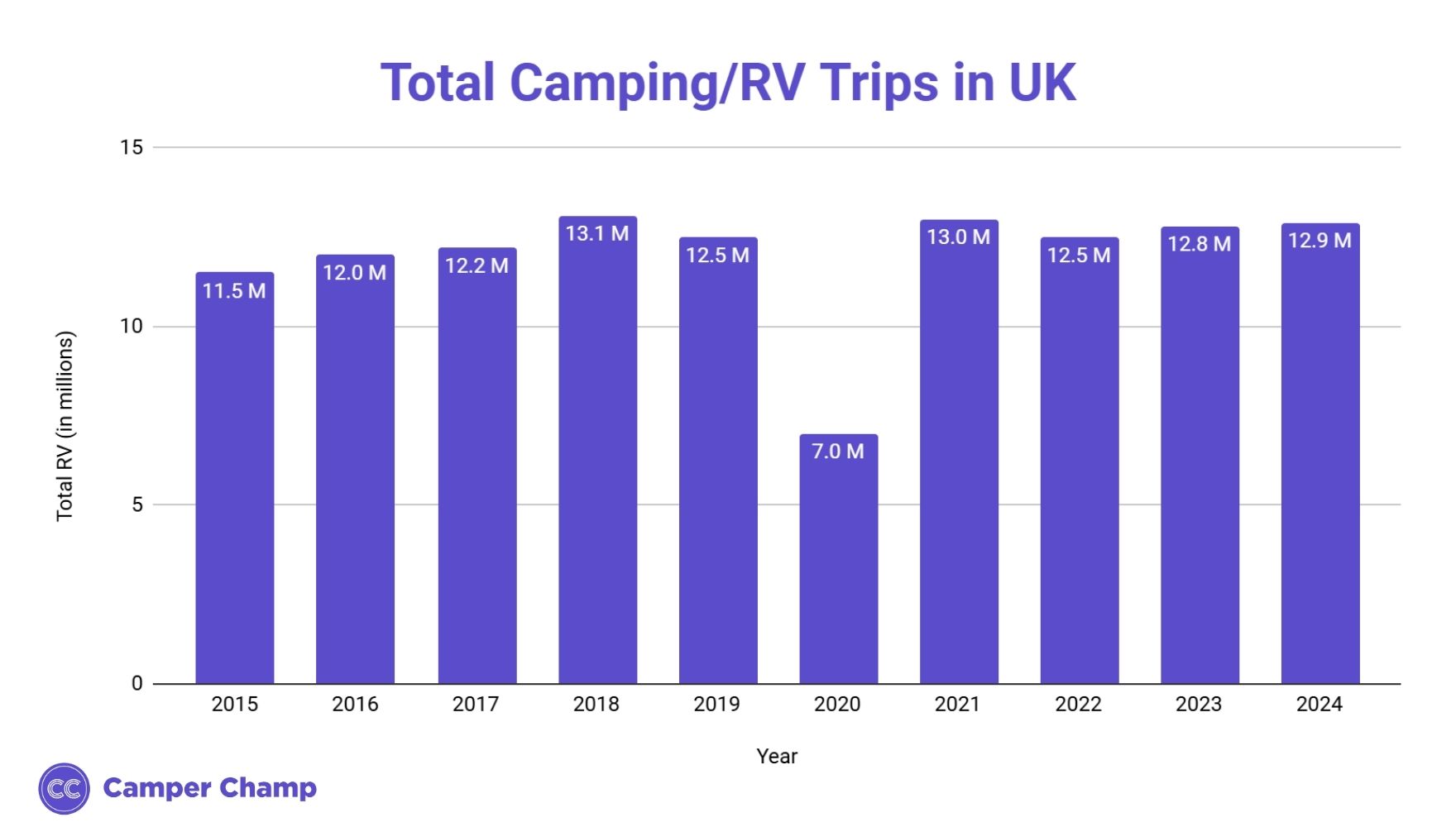
Britons undertook 12.9 million trips in 2024 and 55 million overnight stays. According to UKCCA, the camping segment exceeded that of hotels and B&Bs in market share.
- A decade earlier, in 2014, 11 million camping and caravanning trips were recorded. This grew to 13.1 million trips by 2018, a 19% increase over four years.
How many RVs are there in the UK?
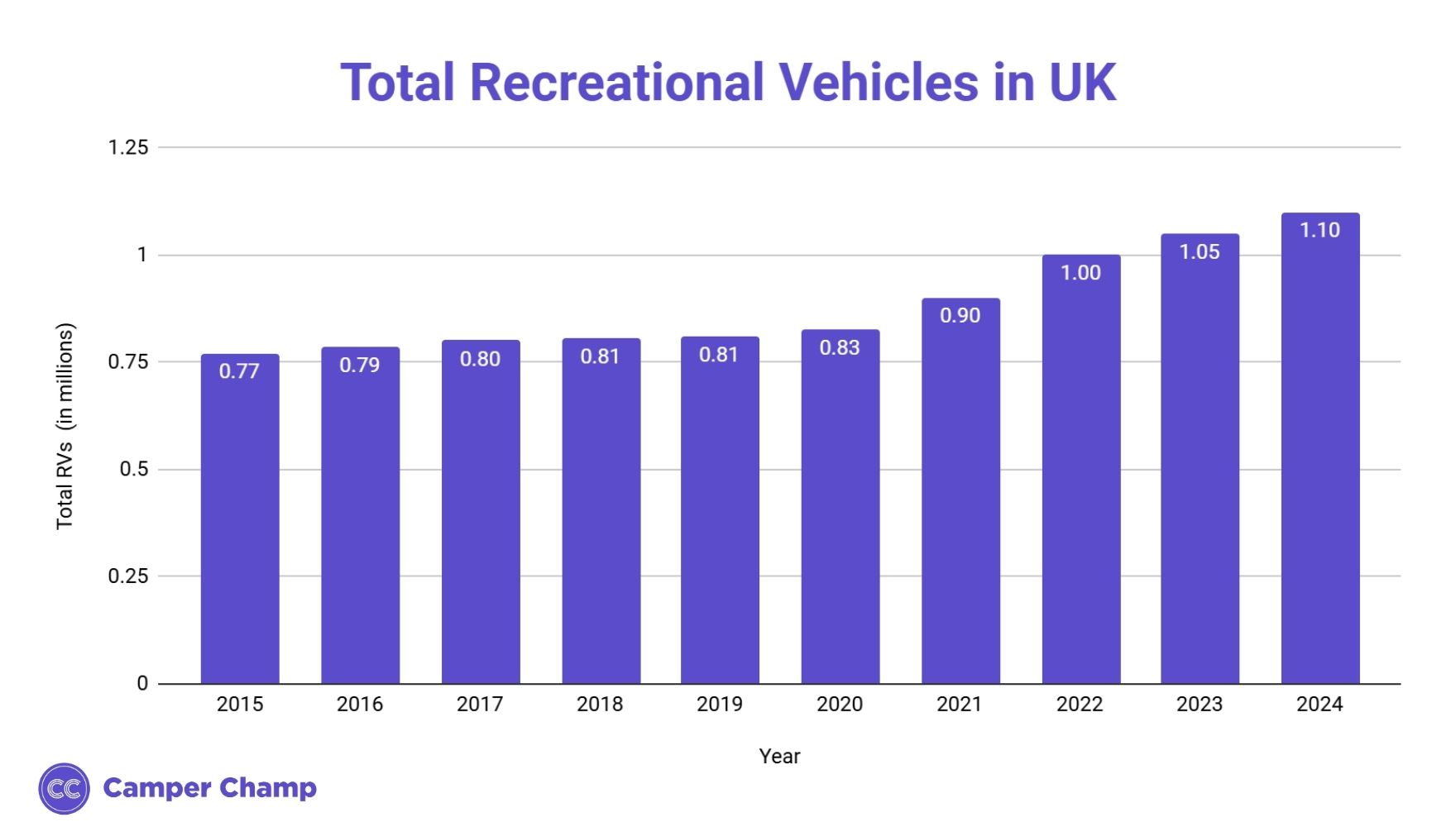
As of 2024, there were over 1.1 million leisure vehicles in the UK, including 555,000 touring caravans and 250,000 motorhomes.
- Ownership grew from 900,000 in 2021 to 1.1 million in 2024 after the pandemic.
- Motorhome ownership has increased by 22% since 2014, while caravan numbers have remained relatively stable.
Note: Leisure vehicles refers to vehicles used for camping, such as motorhomes and touring caravans. A year by year breakdown by type is not available online.
RV Camping Statistics and Spending Trends
The average RV camper spends £40 per person per night, or £160 – £170 for a 4-night trip in the UK.
- For an entire trip, including accommodation, food, fuel, and activities, a couple or group of three people might spend on average £557.
- Spending per camper has increased by 12% since 2014 due to rising costs and longer stays.
Economic Impact of RV Camping in the UK
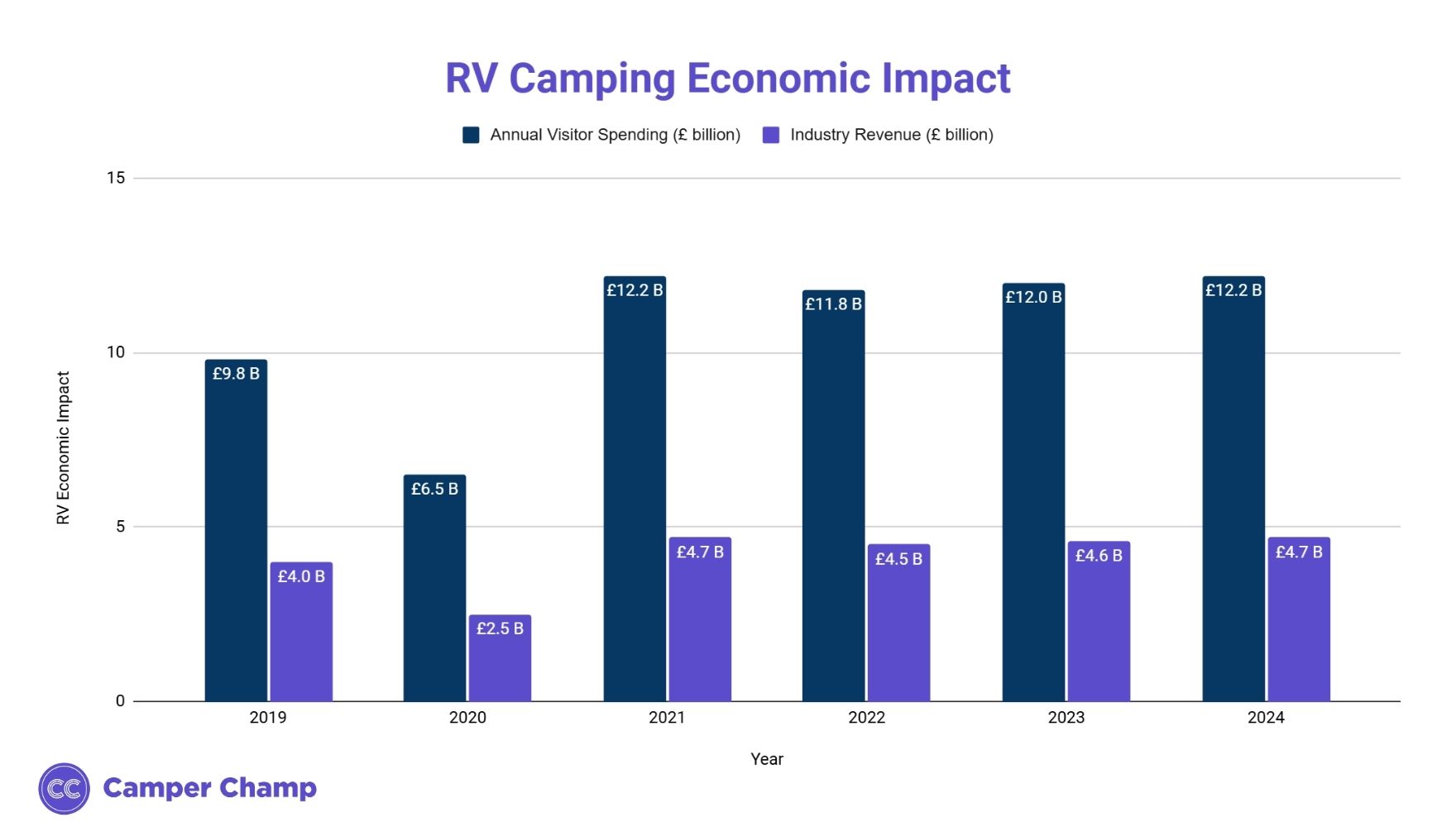
The camping and holiday park industry generated £4.7 billion in 2024, up 22% from 2014.
- £12 billion was generated by camping and caravanning-related spending in 2023.
- The RV Camping industry supports over 226,700 full-time jobs, up from 171,000 in 2019.
- Campers stay 82% longer and spend 12% more per visit than the average UK tourist.
Note: Visitor spending includes all tourist expenditure during the trip, revenue only includes income generated by RV businesses.
RV Camping Demographics
- The largest group of campers in 2023 were aged 35-54 (37%) and 55+ retirees (32%).
- Millennials aged 18-34 now make up 31% of new campers, showing adventure tourism interests in younger people.
- Gender participation is almost the same, but traditional caravanning skews slightly towards male campers.
Travel Preferences
- Most campers take multiple short trips per year (3-5 trips) rather than one long holiday.
- The average stay is 4-5 nights but retirees often take week-long or cross-country trips.
- 70% prefer coastal and countryside locations, national parks are top of the list.
Top RV Camping Destinations in the UK
What are the most popular RV camping areas?
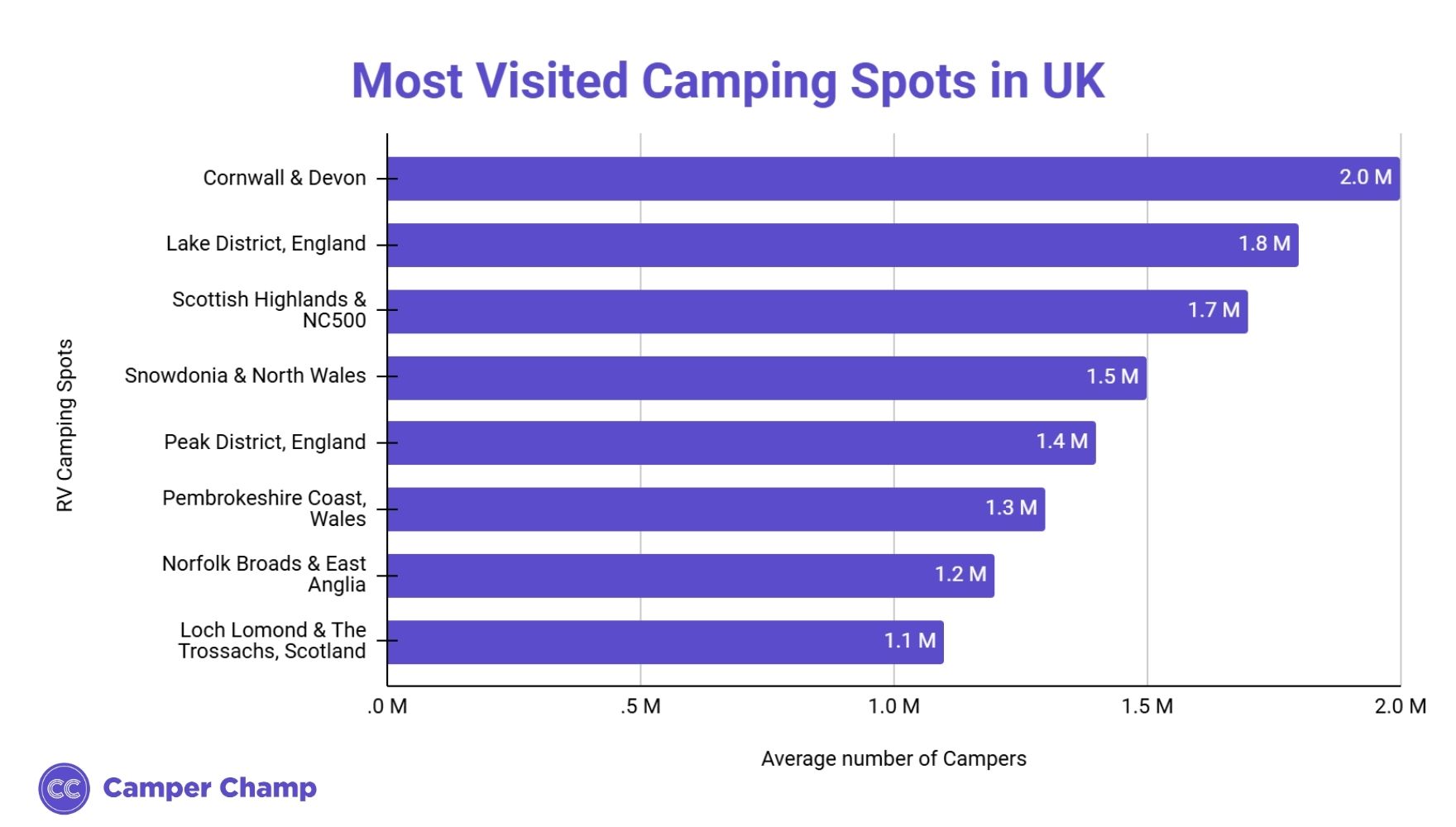
Cornwall & Devon are the top coastal regions with cliffside caravan parks that get 2 million visitors a year.
- The Lake District in England is the most visited national park with lakeside sites getting 1.8 million visitors.
- The Scottish Highlands & NC500 are famous for their driving routes and wild camping, getting 1.7 million campers.
- Snowdonia & North Wales are great for mountain and adventure camping and get approximately 1.5 million campers annually.
- Norfolk Broads & East Anglia are perfect for water-based camping and get 1.2 million campers a year.
UK Travel Resources
Which national parks are best suited for campervans?
Lake District (England) is great for RV Camping as the campsites are well equipped.
- Snowdonia in Wales – mountain landscapes and lakeside camping.
- Loch Lomond & The Trossachs in Scotland – motorhome friendly.
- Peak District in England – central location with caravan areas.
- Pembrokeshire Coast in Wales – seaside camping spots.
Where can you go RV camping for free?
- In Scotland you can wild camp in designated rural areas.
- England & Wales don’t allow wild camping but you may be able to find:
- Brit Stops – pubs, farms and businesses that offer free overnight parking.
- Motorway services and public car parks – some allow overnight parking.
- Farm-based and rural CL (Certified Locations) sites – for campers on a budget.
RV Camping Industry Overview
New motorhome sales reached 16,608 new registrations in the UK, the highest number recorded in 2021.
- Registrations have increased by over 30% since 2014.
- The industry bounced back post-COVID, with visitor spending increasing by approximately 88% between 2020 and 2021.
Key Trends in 2025
- Millennials, Gen Z and other young travellers are starting to adopt the campervan lifestyle (making up 31% of new campers in 2024).
- Work-from-RV: Wi-Fi sites allow remote work, creating a new type of traveller (+42% increase in demand for Wi-Fi sites since 2020, 58% of sites now offer Wi-Fi).
- Sustainability Focus: Campers are prioritising eco-friendly travel, using solar panels and reducing waste (55% of campers prefer ecosites).
- Luxury & Glamping: Upscale camping (pods, yurts) is attracting new demographics (+45% growth in luxury glamping since 2016, glamping now 25% of all campsite bookings).