
Page last updated: 27 May 2025
Glamping combines “glamorous” and “camping” to offer travelers a unique outdoor experience. This fast-growing travel trend gives adventure seekers the thrill of nature with the comfort of luxury accommodations.
How many people go glamping in the US?
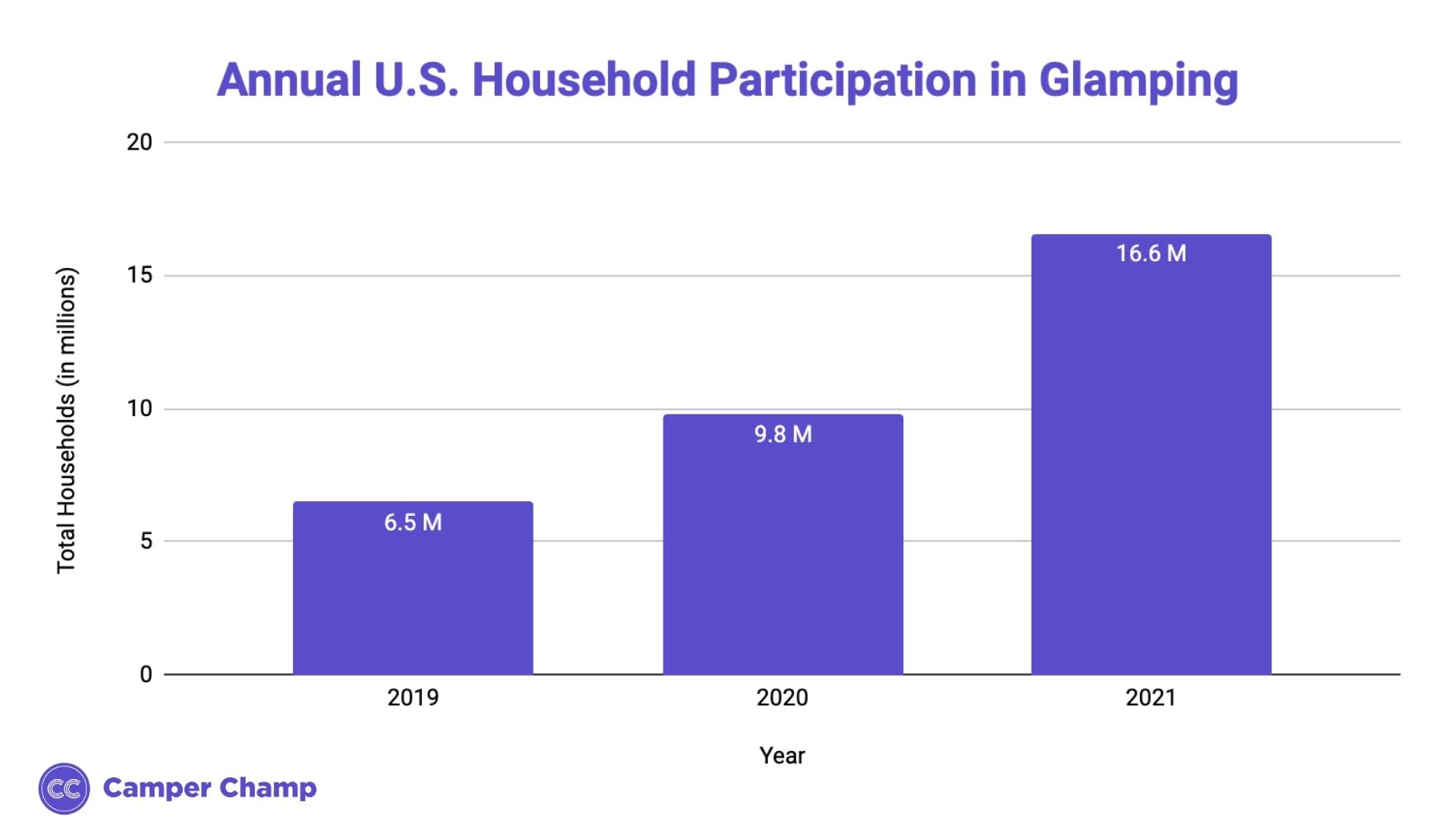
Around 16.6 million U.S. households went glamping in 2021.
- Numbers increased from 6.5 million in 2019 to 9.8 million in 2020, a 51% growth.
- 16.6 million in 2021, a 69.4% increase from 2020.
Note: As of early 2025, data for periods after 2021 has not yet been published.
Demographics of Glampers: Who goes glamping in the US?
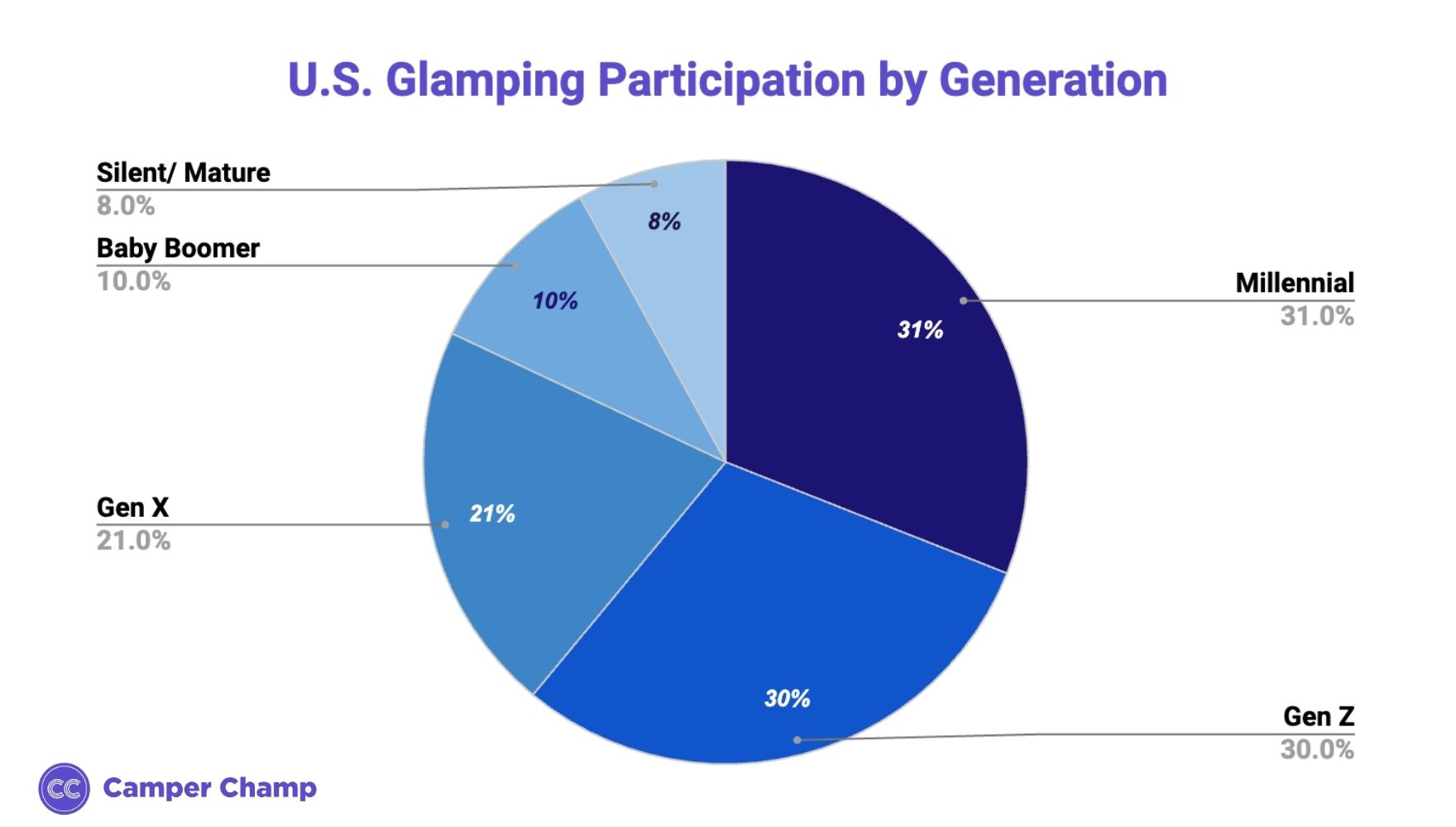
Millennials (31%) and Gen Z (30%) are leading glamping enthusiasts; overall, cabins (72%) are the top accommodation choice for glampers. Most glampers earn $100,000+ annually and travel over 100 miles.
Which generation glamps the most?
Millennials, aged 27-42, glamp the most at 31% of all glampers. Gen Z, aged 11-26, follows at 30%.
- Gen X, aged 43-58, glamps moderately at 21%.
- Older generations like Baby Boomers (10%), aged 59-77, and Silent/Mature (8%), aged 78 and older, glamp the least.
What income levels and travel distances are common among glampers?
Most glampers have an annual income of $100,000 or more. They travel on average over 100 miles to get to their glamping spots.

What is the most popular glamping accommodation in the US?
Cabins are the top glamping accommodation in the U.S. with 72% of glampers choosing them in 2022.
- Tiny homes (58%) and tree houses (55%) are also popular for unique and compact lodging.
- Canvas tents (43%) offer luxury and an outdoor experience.
- Covered wagons (34%), yurts (34%) and teepees (33%) are other glamping options for those who want something different and adventurous.

Glamping Industry at a Glance: Businesses and Operators
The US glamping market has 230 businesses and 6,339 online-listed accommodations, with cabins (38% of listings) and safari tents (36% of listings) as the most popular types of available listings in 2022. The highest ADR is for cabins ($292) and 74% of glamping sites are located near natural attractions.
How many glamping businesses are there in the US Market?
There are 230 glamping businesses in the U.S. market as of 2022 according to the 2022 North American Camping Report, an increase of 290% from 59 businesses in 2012.
- The numbers increased from 161 businesses in 2019 to 183 in 2020, a 13.7% growth.
- The number of businesses increased from 183 in 2020 to 212 in 2021, a 15.8% rise. The numbers steadily rose to 230 by 2022, an 8.5% growth compared to 2021.

Growth in Glamping Online Listings
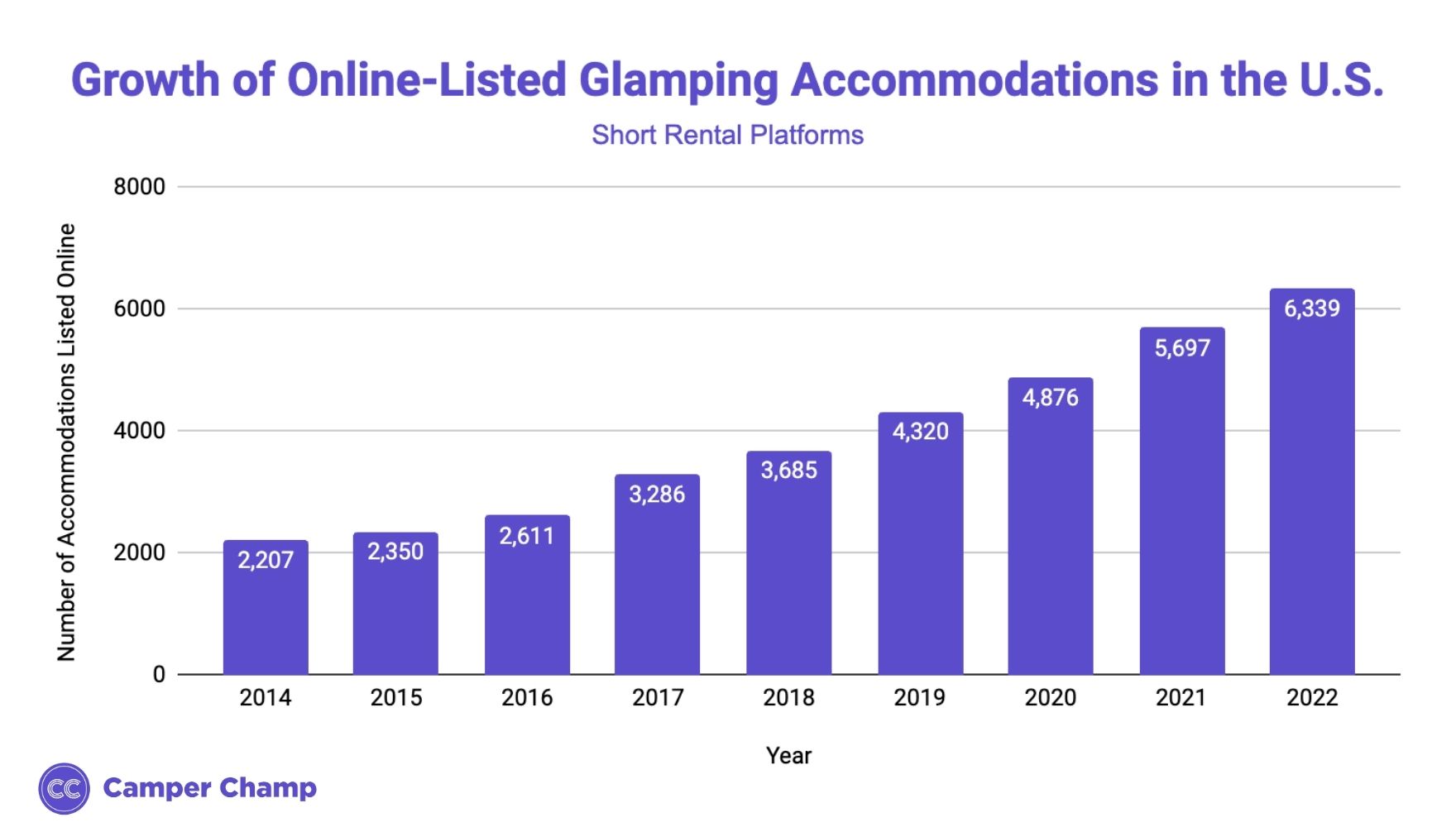
There are 6,339 glamping accommodations listed online as of 2022, a 311.6% increase from 1,540 listings in 2012.
- The number of glamping accommodations grew by 12.9% from 4,320 in 2019 to 4,876 in 2020.
- Listings reached 5,697 in 2021, a 16.8% growth from the previous year, and then reached 6,339 in 2022, an 11.3% increase compared to 2021.
Glamping Accommodation Options
Cabins and tiny houses, offering modern comfort in nature, make up 38% of the U.S. glamping market according to the Glamping Show America survey.
- Safari tents are 36% (luxury camping).
- Airstreams and vintage trailers are 9% (retro style).
- Bell tents are 6%, yurts are 4%, covered wagons are 2%, teepees are 2%, tree houses are 2% and domes are 1%, appealing to those looking for something unique and eco-friendly.

What are the average daily rates for glamping accommodations?
Cabins have the highest average daily rate (ADR) for glamping in the U.S. at $292 per night.
- Domes are $273 and tree houses are $258 for immersive stays.
- Airstreams are $234 and covered wagons are $210 for mid-range.
- Yurts are $202 and all types of tents are $192 for more affordable options.
- Teepees, at $155, the most budget-friendly option for those looking for rustic comfort.

Glamping Accommodations near Major Destinations
74% of glamping accommodations in the US are near natural features and attractions.
- State parks are a feature for 47% of sites and national parks for 42%, both catering to nature-focused glamping.
- Glamping near events like festivals and races accounts for 37% of sites, while 24% are near beaches and 13% near amusement parks. The other 7% is for niche travel.

Why is glamping so popular in the US?
The glamping market in North America was valued at $885.3 million in 2022 and is projected to expand at a sustained market expansion rate of 12.6% CAGR from 2025 to 2030, according to Grandview Research.
- Due to the rapid rate of bookings each year, glamping has steadily gained a following in the U.S.
- Glamping infrastructure expansions are another cause, with glamping sites reportedly increasing by 20% annually since 2015.
Where to go glamping in the US?
- Kona, on the Big Island of Hawaii, is a highly popular destination, attracting 1.5 million overnight stays per year and experiencing rapid growth due to its landscapes, luxury tents and outdoor experiences.
- Austin, Texas, with its culture, live music and nature is another rising spot with 800,000 visitors per year and having seen a 242% increase YOY in bookings.
- The Oregon Coast sees 600,000 visitors and has experienced a 206% increase YOY in popularity due to coastal views and outdoor activities like whale watching and hiking.
- Other glamping hotspots include Under Canvas locations near national parks, which attract 400,000 overnight visitors and luxury outdoor adventures and Eastwind Hotels, in New York.
What are the top glamping destinations in the US?
Glamping US National Parks
According to the National Park Service’s 2024 Visitor Use Statistics, the following parks recorded significant overnight stays:
- Great Smoky Mountains National Park: Approximately 12.2 million total visitors with 501,800 overnight stays.
- Grand Canyon National Park: Approximately 4.7 million total visitors with 1.18 million overnight stays.
- Zion National Park: Approximately 4.7 million total visitors with 360,000 overnight stays.
- Yellowstone National Park: Approximately 3.3 million total visitors with 1.26 million overnight stays.
- Acadia National Park: Approximately 4 million total visitors with 208,700 overnight stays.
Best Glamping in the US by Landscape
- Mountains – The Resort at Paws Up, Montana (50,000 guests per year). Fine dining, outdoor activities and luxury tents in a mountain setting.
- Deserts – Under Canvas Moab, Utah (400,000 visitors per year). Safari tents, mountain biking and rafting near Arches and Canyonlands National Parks.
- Forests – Firelight Camps, Ithaca, New York (30,000 guests per year). Safari tents, hardwood floors and wineries nearby.
- Coasts – El Capitan Canyon, California (20,000 visitors per year). Cedar cabins, yurts and beachside glamping.
Colorado Glamping Highlights
Colorado’s mountains, forests and rivers make it the perfect place to glamp.
- Colorado attracted 93.3 million visitors in 2023, showing a growing interest in outdoor experiences including glamping; tourism generated $28.3 billion that contributed to the local economy, according to the Colorado Tourism Office.
Glamping in Colorado
Around 21.6 million overnight trips were taken in Colorado in 2023 with 5 million of those being outdoor focused.
- Glamping Revenue: Colorado glamping sites average $364,000 per site per year, $200 ADR.
Denver Glamping Options
- Collective Retreats: Near Denver, features luxury tents, gourmet meals and great views. Perfect for outdoor adventure and comfort.
- Yurt at Golden Gate Canyon State Park: 30 miles from Denver, highlighting cozy yurt, hiking trails and mountain views for unique and accessible camping.
- Glamping Hub Listings: Treehouses, safari tents, luxury cabins near Denver. Lots of options for different traveler types.
US Travel Resources
What is the economic impact of glamping in the US?
The North American glamping market was valued at $885.3 million in 2022, expected to expand at a 12.6% compound annual growth rate (CAGR) from 2025 through 2030 as per Grandview Research.
Impact on Local Communities
Glamping provides support for thousands of hospitality, tourism, and outdoor recreation jobs. It largely contributes to local economic development.
- Increased demand for local businesses, including suppliers, restaurants and service providers, strengthening community economies.
- Eco-tourism initiatives in many sites utilize sustainable materials and promote conservation efforts to meet the growing demand for traveling responsibly.
What is the average spending on glamping trips?
The average spending on glamping trips is around $150-350 per night, depending on location and amenities.
- This is considerably more expensive than traditional camping, which starts at $20-50 per night for a basic site; for traditional camping, average spending can go up to $145 per trip if including gear and other expenses.
Tips for Planning Glamping Trips
Choosing the Right Glamping Site
- Amenities: Look for essentials like luxury beds, private bathrooms, Wi-Fi, and kitchen facilities for a comfortable stay.
- Location: Pick a site near activities you enjoy, such as hiking, kayaking, or sightseeing.
- Budget: Glamping varies from mid-range to luxury; factor in accommodation, travel, food, and activity costs.
Best Seasons for Glamping
- Spring (March–May): Pacific Northwest and Southeast regions have mild weather and blooming wildflowers.
- Summer (June–August): Mountain areas like Colorado and California have warm days ideal for outdoor activities.
- Fall (September–November): New England and Rocky Mountain regions have great foliage and comfortable temps for hiking.
- Winter (December–February): Glamp in Colorado and Utah for snow glamping with cozy accommodations and winter activities.
What to expect from glamping?
- Luxury Beds: Sleep peacefully with quality mattresses and premium linens instead of sleeping bags.
- Private Bathrooms: Most sites have en-suite or nearby modern bathrooms with hot showers.
- Wi-Fi: While available at most sites, some have limited or no Wi-Fi for a digital detox.