Support



RV Rental Canada
Compare Prices
Compare 160 Suppliers
Compare over 160 campervan rental brands worldwide.
Compare Prices
Find lower prices and you could save $100s.
No Booking Fees
Easy to use and no booking fees.
Expert Support
Our multilingual support team will help you book.


Compare 160 Suppliers
Compare over 160 campervan rental brands worldwide.
Compare Prices
Find lower prices and you could save $100s.
No Booking Fees
Easy to use and no booking fees.
Expert Support
Our multilingual support team will help you book.
Compare RV Rentals In Canada
Use our easy 3 step process to find your perfect motorhome for touring Canada. It’s as simple as SEARCH, COMPARE & SAVE by booking with Camper Champ. We instantly compare hundreds of campers for better prices and hassle-free bookings.
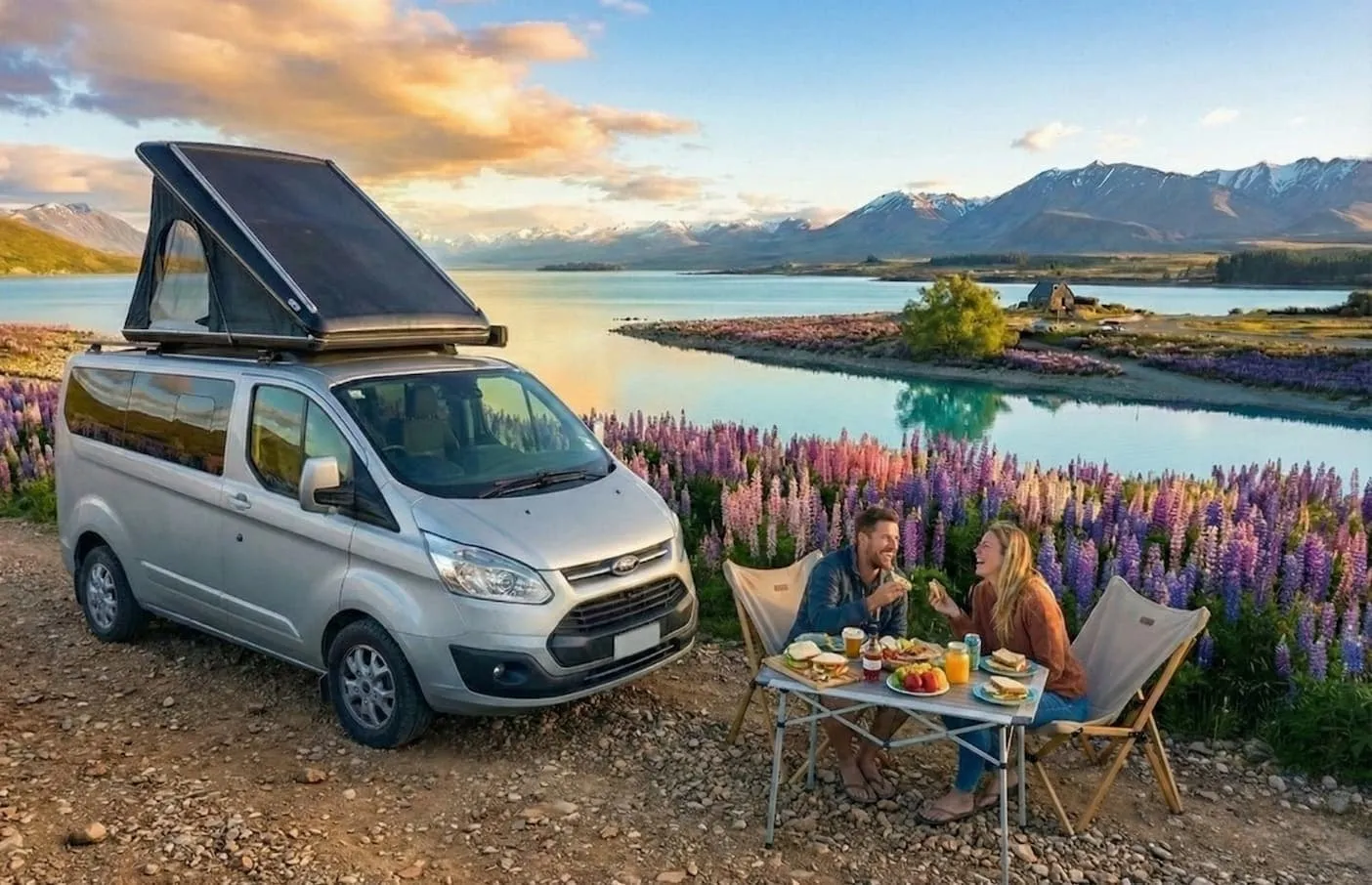
Compare campervans from multiple suppliers in Canada in one place with Camper Champ.
Campervan rental in Canada, picking up in Vancouver, starts from about CAD $45 a day. Prices however are dependent on vehicle type, seasonality and other factors. Many suppliers offer popular Class C RVs with brands such as Cruise Canada, Meridian, Fraserway and Canadream being especially popular.
Canadians are well-versed in the RV lifestyle, so you’ll find many facilities catering to life on the road. From modern RV parks to beautiful campsites surrounded by nature and plenty of scenic routes to get you from point A to B, the Canadian motorhome experience is one of the best in the world.
Popular Campervans in Canada
Find the perfect camper for your travel needs.
Discover Canada your way by choosing a class of RV that suits your travel needs.
Saver 2

Automatic · Toilet · Shower
Truck Camper Scout

Automatic · Toilet
A Class 32 - The Grizzly

Automatic · Toilet · Shower
34-37 Ft Class A Motorhome Type S

Automatic · Toilet · Shower
30-31 Ft Class C Motorhome Type N
Automatic · Toilet · Shower
30 Ft Class A Motorhome Type Q
Automatic · Toilet · Shower
C-MED Plus

Automatic · Toilet · Shower
C-MED 2310 - 245
Automatic · Toilet · Shower
Wrangler

Automatic
Solis
Automatic · Toilet · Shower
Four Winds
Automatic · Toilet · Shower
C-Small
Automatic · Toilet · Shower
Maxi Motorhome MH-A
Automatic · Toilet · Shower
C30 Large Motorhome

Automatic · Toilet · Shower
C-Large MH23/25-S
Automatic · Toilet · Shower
Category 3 C-MED (C21-22)
Automatic · Toilet · Shower
C-XLarge MH29/31-S
Automatic · Toilet · Shower


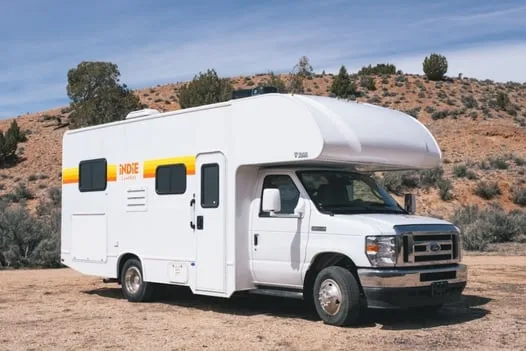


Not all vehicles may be available. Use the search tool to check availability for your travel dates.
RV Rental Prices 2026–27
How much does it cost to rent an RV in Canada?
Campervan rental in Canada, picking up in Vancouver, starts from about CAD $45 a day. A typical campervan costs around $135 a day.
- Cheapest campervan
- $45/day
- Typical campervan
- $135/day
Prices updated November 2026 · quotes from 7 rental companies
When is the cheapest time to rent an RV in Canada?
December 2026 is the cheapest month to rent a campervan in Vancouver, at around $110 a day for a typical campervan.
July and August are the most expensive months.
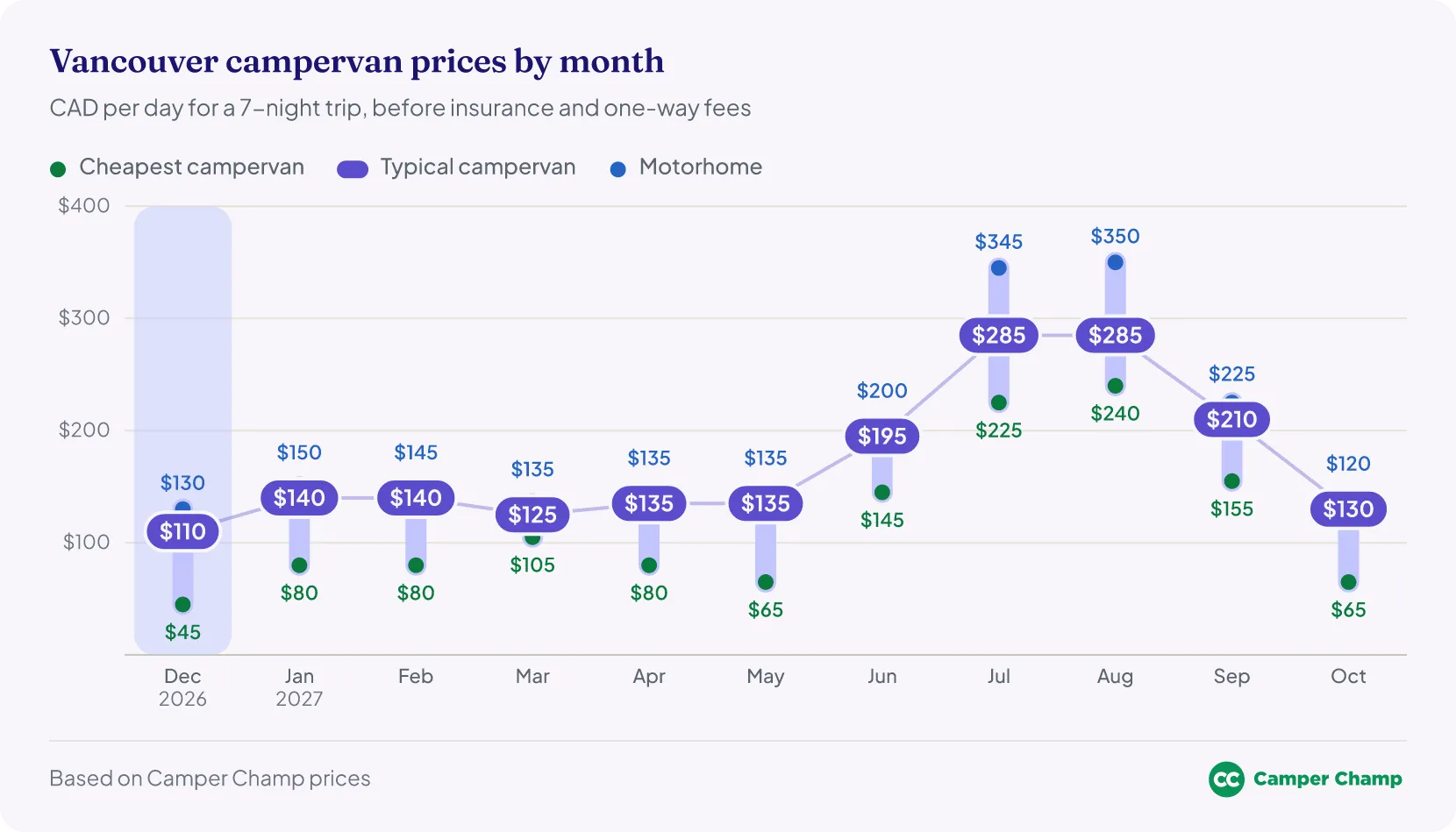
Campervan rental prices in Vancouver by month
| Month | Cheapest campervan | Typical campervan | Motorhome |
|---|---|---|---|
| December 2026 | $45 | $110 | $130 |
| January 2027 | $80 | $140 | $150 |
| February 2027 | $80 | $140 | $145 |
| March 2027 | $105 | $125 | $135 |
| April 2027 | $80 | $135 | $135 |
| May 2027 | $65 | $135 | $135 |
Cheapest campervan rental in Vancouver by van size
| Van size | Cheapest company |
|---|---|
| 2 berths | Cruise Canada · $49 a day |
| 3–4 berths | Cruise Canada · $49 a day |
| 5+ berths | Cruise Canada · $49 a day |
Prices vary by dateget a quote for your dates
Understanding Different RV Models in Canada
When it comes to hitting the open road in style, nothing beats the experience of journeying in an RV or Recreational Vehicle. These nomadic homes on wheels provide the unique fusion of travel and comfort, allowing you to explore the vast landscapes of Canada with the conveniences of home at your fingertips.
The world of RVs offers a rich array of options, each with its advantages and considerations. Your choice will depend on your budget, travel needs, the size of your travelling party, and your comfort preferences. Whether you're a solo adventurer looking for a compact camper or a family seeking a home away from home, there's an RV model class for you.
However, with the variety of RV classes available on the market, it can be overwhelming to identify the perfect fit for your travel needs. We’ve delved into the primary RV model classes and unraveled their unique features.
Park model RVs, also known as recreational park trailers, are unique in the world of RVs. They are designed to look like a home and are meant for seasonal use, typically in RV parks or campgrounds. While they're transportable, they're not meant for regular travel.
At around 37 m² (400 sq ft), park models offer plenty of living space, including full-size appliances and a comfortable bedroom, making them perfect for individuals or families who want to maintain the comforts of home while on the road.
Think of these as the luxury yachts of the highway. Class A motorhomes are the largest and most luxurious RVs available, often ranging from 8 to 14 m (26 to 45 ft) in length. They're built on specially designed motor vehicle chassis and resemble a bus in shape, with a flat or vertical front end and large windows. Amenities may include king-sized beds, full bathrooms, kitchen, living area, washer/dryer, and entertainment systems.
While Class A motorhomes offer unrivalled luxury and space, they also have a higher price tag and less fuel efficiency. Manoeuvring them can be challenging for beginners, and you may encounter restrictions on where you can park due to their size.
Despite the 'B' in the name, these are the smallest motorhomes, also known as camper vans. Class B RVs are built using standard van bodies, which manufacturers outfit with sleeping, kitchen, and bathroom facilities.
Class B motorhomes typically range between 5.5 to 7.3 metres long. They are easier to drive, park, and maintain, offering fuel efficiency. Although they lack the spaciousness of Class A and Class C motorhomes, modern designs and innovative features ensure they utilize their limited space exceptionally well.
A Class C motorhome is somewhat of a middle-ground option between the Class A and Class B motorhomes. They are built on a truck or van cutaway chassis with an attached cab section, distinguished by an over-cab sleeping area. The length can range from 6.1 to 10.1 metres.
These motorhomes offer more sleeping capacity than Class B motorhomes, and they often include similar amenities to those found in Class A models but on a smaller scale. They're easier to drive than a Class A and offer a good balance of luxury and manoeuvrability.
Travel trailers are towable RVs that come in a wide range of sizes, from tiny teardrop trailers to expansive two-storey giants. These non-motorized RVs are designed to be towed by a car, SUV, minivan, or pickup truck via a bumper or frame hitch.
Travel trailers offer great versatility and can accommodate various travel needs and budgets. They're detachable, so you can use your vehicle for day trips or errands once you've set up camp. However, towing can be challenging, especially for first-time RVers.
The fifth-wheel trailers are the most spacious of the towable RVs, designed to be towed by a pickup truck using a special hitch in the truck bed. They offer many of the same amenities as Class A motorhomes, including slide-outs to increase living space.
The hitch's design allows for easier manoeuvrability while towing, making it more stable and safer on the road. On the flip side, you'll need a compatible truck and the necessary skills to handle the size and weight.
These compact units are designed to be loaded onto the bed of a pickup truck. Truck campers offer sufficient sleeping space, a small kitchenette, and usually a compact bathroom facility. The primary advantage of a truck camper is its mobility and compactness. They are perfect for adventurers who frequently travel off-the-beaten-path or in areas with tight spaces. With a truck camper, you can essentially camp anywhere your truck can go.
However, the living space in a truck camper is minimal, making them ideal for solo travellers or couples. While they don't provide the comfort of larger RVs, their flexibility and affordability make them a great choice for rugged, adventurous travel.
Pop-up campers, also known as fold-out campers or tent trailers, are a lightweight, affordable option perfect for novice RVers and camping enthusiasts. When in transit, these trailers are compact and streamlined. Once you reach your destination, they expand (either by cranking a handle manually or through an automatic system) to reveal sleeping areas and modest living spaces.
Some pop-up campers have basic amenities like a small kitchenette and a portable toilet. The main advantage of a pop-up camper is its ease of towing and storage. On the downside, they lack the insulation and amenities of larger RVs and may not be the best choice for colder climates or luxury-seeking travelers.
As the name suggests, hybrid trailers are a mix—in this case, a combination of a hard-sided travel trailer and a pop-up camper. They feature expandable tent sections, typically at the front, back, or side of the trailer, providing extra sleeping quarters.
Hybrid trailers offer more living space than traditional pop-ups while maintaining a lightweight design that's easy to tow. They typically include more amenities than a pop-up camper but fewer than a traditional travel trailer. While the canvas sleeping areas allow for a more immersive nature experience, they offer less protection from the elements.
Campervan Depots
- ACanaDream
- BFour Seasons
- CMotor Home Travel
- DIndie
- EIndie
- FIndie
- GFraserway
- HFraserway
- IFraserway
- JFraserway
- KFraserway
- LFour Seasons
- MFour Seasons
- NCanaDream
- OFour Seasons
- PFour Seasons
- QCruise
- RCruise Canada
- SCruise Canada
- TCruise Canada
- UCruise Canada
- VCanaDream
- WCanaDream
- XCanaDream
- YCanaDream
- ZOwasco
The Self-drive Holiday in Canada
Your campervan vacation through Canada will vary immensely depending on where (and when) you visit. Still, one thing is certain—you'll never tire of the scenery. The Canadian RV experience gives you the freedom to explore at your own pace and the convenience of having all your essentials close at hand.
- Affordable: Combining your transportation and accommodation expenses will slash your budget significantly, leaving you extra cash for other fun activities.
- Convenient: Canada is MASSIVE, and if you want to see more than one area, you'll need to spend some time on the road. Traveling via campervan is the key to road-tripping in Canada, and you'll find plenty of campgrounds to roll into as you explore.
- Flexibility: If you have commitment issues with detailed itineraries, we understand. One of the biggest perks of renting an RV is choosing your own adventure and leaving room in your plans for pleasant surprises.
- Spend more time outdoors: Chances are high that you like spending time outdoors if you're renting an RV in Canada. Why overspend on a tiny hotel room when you can fall asleep listening to the sound of nature at a secluded campsite?
- On-board facilities: Keep all your creature comforts close at hand as you traverse the vast expanses of "the Great White North".
- All traffic moves on the right-hand side.
- Seatbelts and child restraints are compulsory.
- Carry a valid driver's license when traveling.
- Pedestrians have the right of way.
- Brush up on your French if you're RVing in Quebec—as it's the official language, and all traffic signs will be posted in French.
- The criminal blood alcohol concentration limit in Canada is 0.08%. In many provinces and territories, you can still face immediate roadside penalties if you are in the warn range (blood alcohol concentration between 0.05 and 0.079).
- Watch out for wildlife, especially around dawn, dusk, and when traveling at night. Country roads and long stretches of the open road are notorious for crossing wildlife.
There aren't many toll roads in Canada, but there are a few in the eastern provinces (such as Ontario, Quebec, Nova Scotia, and Prince Edward Island).
Toll payment methods vary by route. Some toll roads use transponders or license plate billing and are fully electronic (with no cash booths), while others may allow payment by card or cash at staffed toll plazas. Be sure to check with your rental company about their policy on toll roads if you plan on driving through any of these provinces.
10 Tips for Travelling Canada in an RV
Chase the sunshine
Summer and early autumn are prime campervanning seasons in Canada. The weather is warm, with plenty of sunshine to keep you company as you amble along. There's a reason Canada is called the "Great White North", and you should avoid winter and early spring if you're not up for camping in snowy conditions.
Plan your route ahead of time
You'll want to leave some wiggle room in your plans, but you should focus on a rough route before you hit the road.
Stick to a small region
Canada is the second largest country in the world. It stretches from coast to coast, and most of the country is uninhabited and undeveloped. You don't want to spend your whole vacation in the driver's seat, so pick a region, decide on the top things you want to see, and keep driving times between destinations to a minimum.
Take the Scenic Route
Campervanning is more popular than ever, and many of the more popular areas (including attractions and campgrounds) are packed during the summer months. Spend some time researching lesser-known spots around the country—there are plenty to choose from!
Find the perfect rental
You're going to be spending a lot of time in your campervan, and it will likely be one of the biggest expenses of your vacation. Make sure you choose a vehicle that suits your travel style, and use Camper Champ to find the best deals across all the top companies.
Reserve early
This goes for your RV rental and campgrounds. The main season for camping is fairly short and popular, so you want to ensure you can snag a good site and a vehicle that suits your needs as early as possible. Aim to book at least five months in advance.
Enjoy the activities available
Canada is an outdoor lover's paradise. With scenic trails to hike, crystal clear lakes to paddle, and plenty of rivers to fish, there are plenty of ways to get out and enjoy the great outdoors.
Watch out for wildlife
Canada is wild. Once you get out of the city, there are long stretches of road surrounded by wilderness where the animal population is much denser. Keep your eyes peeled as you traverse these scenic expanses, especially if you're driving at sunrise, sunset, or into the evening.
Keep an eye on your resources
This is especially critical as you leave large cities in your rearview. Make sure you fill up on gas, fresh water, and any other critical supplies before you leave town, as you may be on the road for quite some time before you encounter another spot to top off your resources.
Create a packing list
Don't leave the essentials behind! Make a packing list with all the necessities and check it twice before departure. If you're going to be spending time outdoors, don't forget sun protection, bug spray, and of course, a good pair of hiking boots. A physical (or at least offline map) is always a good idea, plus some entertainment for any passengers you have with you!
Travel Savy in Canada
Canada can be a pretty expensive destination for a motorhome vacation. Gas prices are up, and long distances between destinations can add up the dollar signs. That being said, there are plenty of ways to keep costs low for budget-conscious campervan enthusiasts.
- Stick to a small area. Seeing all the major attractions while campervanning in Canada may be tempting. But there are great distances between things here. Pick your number one bucket list item, then check out what’s around that area. Chances are there are plenty of awesome things to do and see in a small area, and you just don’t know it yet!
- Return to your pick-up point. Another bonus of sticking to a small region is that you’ll have no problem dropping your rental off where you picked it up, saving you from a steep one-way drop-off fee.
- Book early. Booking early can save you a big wad of cash. This is true for campsites and rentals!
- Shop around. Don’t get locked into the first rate you see! A price comparison tool like Camper Champ lets you compare prices from motorhome rental agencies to secure a great deal.
- Avoid peak season. Summers are crowded, and most things are priced higher during this busy season. If you want sunny, pleasant weather without all the people and prices that come with summer, plan your trip for the fall!
- Downsize. A luxury motorhome with all the bells and whistles has its perks—until you get to the gas station and have to fill the tank! Opt for a more fuel-efficient vehicle to help save money, especially if you plan on driving long distances.
- Seek out cheap campsites. Canada has plenty of options for RV campers. Some of the cheapest picks will be in provincial parks, so avoid large RV resorts if you want to keep costs low.
While you can technically go campervanning in Canada year-round, the real camping season is between May and October. Most campsites and RV parks are closed outside these months, though a few offer basic winter camping options for the toughest campervanners.
Unsurprisingly, summer is the peak season for motorhome holidays in Canada. July and August are the most crowded and expensive months to travel, as the weather is at its best around the country.
June and September are considered shoulder seasons. The weather is a bit more mild, as are the temperatures and prices.
Early October can also be an excellent time to visit, especially in Eastern Canada, when the fall foliage is coming into its brightest colour displays. Nights can get chilly during the autumn, so make sure to pack some extra layers.
It would likely take a lifetime to wander through all the different landscapes of Canada. Since you probably don't have that much time to spare on a motorhome vacation in the "Great White North", you'll need to pick one or two regions and select a smaller sub-region to work with. Now, don't get FOMO quite yet. By choosing a more manageable route, you'll get to do a deep dive into whichever area you choose in just a week or two, which will also save you quite a bit of time and money.
To decide what you can fit into your itinerary, consider driving times. You don't want to waste all your time on the road, so aim for a maximum of 2–3 hours of driving per day. You'll find plenty of places to stop along the way but do some research in advance so you're not driving past anything of interest.
Give yourself at least two weeks to explore some of Western Canada's top attractions. Pick up your campervan in Vancouver and make your way toward Jasper, Yoho, and Banff national parks. All three have RV-friendly campgrounds and plenty of great provincial parks along the scenic route from Vancouver. If you don't have a full two weeks, you can cut out one of the parks or start your journey from Calgary rather than Vancouver.
Eastern Canada is much more populated than the West, giving you more opportunities to start your campervan trip. There are several big hubs in the east, including Quebec City, Toronto, Montreal, and Ottawa. Pick up your rental, then head for the open road. No matter which city you choose as your hub, you'll find a host of great outdoor recreation at your fingertips, making it easy to see a lot if you're short on time. Pick whichever area piques your interest most, and plan on wandering for at least one week.
If you're feeling adventurous, you can take on Yukon's Golden Loop in about one week, starting in Whitehorse and heading for the impossibly beautiful reaches of Alaska. Remember that Alaska is part of the United States, so be ready for a border crossing!
As you plan your itinerary, remember that one-way drop-off fees are expensive, but so is gas money. If time is more precious to you, it may be worth dropping off your rental in a different city rather than doubling back to where you came from. Careful planning can help you avoid both of these scenarios, and plenty of great circular road trip routes are available across the country.
Parking an RV in Canada
The simple answer is that you must pull into a proper campsite each night. U.S. law prohibits sleeping at rest stops and shopping malls, so make sure you have your campsites booked in advance! Walmarts have always been considered a safe haven for those seeking free campsite digs, but company policy is becoming increasingly murky. You’ll need explicit permission from each store manager to park overnight at a Walmart, so it’s best to avoid these unless it’s an absolute last resort!
Play it safe and reserve a site at a state park, national park, or RV resort. You’ll find many sites scattered across the country at varying price points. Different campgrounds offer different amenities, so research in advance to find the right site for your preferences.
Canada's national parks are the crown jewels of its epic outdoor scene. Many choose to base their entire RV vacation around the country's top parks, including Banff, Jasper, and Yoho, which are conveniently located in (relatively) close proximity to each other. There are also plenty of options for those wanting to go off the beaten path, including Newfoundland's Gros Morne National Park and Waterton Lakes National Park in Alberta. No matter which region you're exploring, you'll find a handful of national parks worth discovering.
Western Canada
British Columbia
- Yoho National Park
- Kootenay National Park
Alberta
- Jasper National Park
- Banff National Park
- Waterton Lakes National Park
Saskatchewan
- Prince Albert National Park Manitoba
- Riding Mountain National Park
Eastern Canada
Ontario
- Bruce Peninsula National Park
Quebec
- La Mauricie National Park
Newfoundland
- Gros Morne National Park
The Canada Experience
Due to its sheer size, exploring every nook and cranny of Canada is all but impossible in a single lifetime. Instead, pick just one region, figure out your bucket list of must-dos within that area, and plan a route around them. It's important to note that much of Canada is undeveloped, especially within the northern reaches. The south is much more accessible in terms of paved roads and RV-friendly facilities.
British Columbia, Alberta, Saskatchewan and Manitoba
Ranging from the rugged shores of the Pacific Ocean through the Canadian Rockies and beyond, Western Canada is what dreams are made of.
British Columbia and Alberta are the most popular provinces for campervanning, thanks to the host of world-famous national parks, charming beach towns, and absolutely breathtaking mountain vistas. You could spend your vacation bouncing between Jasper, Banff, and Yoho national parks, using Vancouver or Calgary to pick up and/or drop off your RV.
You could also explore the verdant hills and valleys of Manitoba or coast the Trans-Canada Highway through the rolling plains of Saskatchewan.
Ontario, Quebec, Newfoundland and Labrador, New Brunswick, Nova Scotia, and Prince Edward Island
Canada's Eastern provinces are just as impressive as the Western ones, so buckle up for a memorable ride.
This large region packs a big punch, from New Brunswick's Fundy Coastal Drive and the scenic seaside towns of Prince Edward Island to the quaint mountain villages in southern Quebec and endless outdoor activities in southern Ontario.
Start your campervan vacation in Montreal, Quebec, or Toronto and explore underrated national parks, or head to Halifax and spend your trip ambling around Nova Scotia, New Brunswick, and Prince Edward Island.
Yukon, Northwest Territories, Nunavut
Canada's northern region may be large, but it's pretty small in terms of offerings. This region claims nearly half of the country's landmass, but about 90% is uninhabitable due to rugged terrain and freezing temperatures. So, not exactly ideal for exploring via RV!
The absolute wilderness does call for more adventurous types, and exploring some of this untouched region on a campervan vacation in Canada is possible. Yukon and the Northwest Territories have more facilities available to RVers, along with plenty of gorgeous scenery that you'll have mostly to yourself. Those who take this road less travelled (read: rarely travelled) can look forward to the pure, unspoiled wilderness, endless breathtaking views right from the driver's seat, and lots of wildlife. Highlights in northern Canada that are pretty accessible to campervans include the areas around Yellowknife, Whitehorse, and Fort Smith.
Remember that exploring Canada's northern region will take a lot of advanced planning. You'll need to know exactly where you can get gas, which roads are accessible with your RV, and which campsites you can pull into, as options are sparse this far north.
Popular Destinations in Canada
From Vancouver through Calgary and the Rocky Mountains to Nova Scotia, Canada is the perfect place for a campervan holiday adventure.
Frequently Asked Questions
Can my rental RV be fitted with a bike rack?
Several campervan rental companies will allow you to fit a bike rack to the vehicle. Please note that bike racks may not be available for all campervan makes and models. Usually bike racks must be reserved in advance.
How much does it cost to stay at an RV park or campground?
Canada has thousands of campgrounds, which often cost around $13–$60 (Canadian dollars) per night in provincial and national parks (depending on the park, services, and season). Some high-demand serviced/equipped sites can be higher (for example, equipped sites in Banff can be $86.50+ per night).
Can you sleep anywhere in an RV in Canada?
Not everywhere. In Canada, you generally need permission to park overnight, and rules vary by province/territory and municipality—so you can’t assume you can sleep in your RV anywhere you can park.
- Campgrounds and RV parks (most straightforward option). Canada has thousands of campgrounds, typically cost around $40–90 CAD per night.
- Certain public lands (like Crown land), where dispersed camping may be allowed under local rules, permits, and stay limits (often stricter for non-residents).
- Some highway rest areas, where overnight stopping is allowed only if signage permits (rules vary).
Walmart can sometimes work, but it depends on store-manager discretion and local bylaws.
Always check posted signs, local bylaws, and your rental agreement before settling in for the night.
Can I travel to the USA in an RV rental from Canada?
Generally, yes - many Canadian campervan rental companies will allow you to travel to the USA. Check the policy of your preferred RV rental supplier for details and terms.
You must comply with visa and customs requirements when crossing the border.
Can I get an RV rental with unlimited kilometres in Canada?
The majority of rental companies in Canada do not offer unlimited kilometres as a standard rental inclusion.
In most cases, kilometres (km) are capped at a daily rate and additional fees will be incurred if you exceed this. Additional kilometres can often be purchased in packages. Unused kilometres are not refunded when the vehicle is returned.
What licence do I need to rent an RV in Canada?
All drivers must have a current and full driver’s licence to rent a vehicle. Foreign licences are acceptable if they are in English or French, or accompanied by an accredited translation. If your licence is in a language other than English or French, an IDP (international driving permit) is required.
If you plan to visit Canada for a longer period of time you may be required to obtain an IDP in addition to your regular licence. The rules can vary between provinces so make sure to check in advance and take note of the local restrictions.