

Updated
Both a UNESCO World Heritage Site and an International Biosphere Reserve, Hawaiʻi Volcanoes National Park is one of the world’s most remarkable volcanic landscapes. It protects two of the world’s most active volcanoes, Kīlauea and Mauna Loa, and offers extensive wilderness and hiking opportunities.
How many people visit Hawai’i Volcanoes National Park each year?
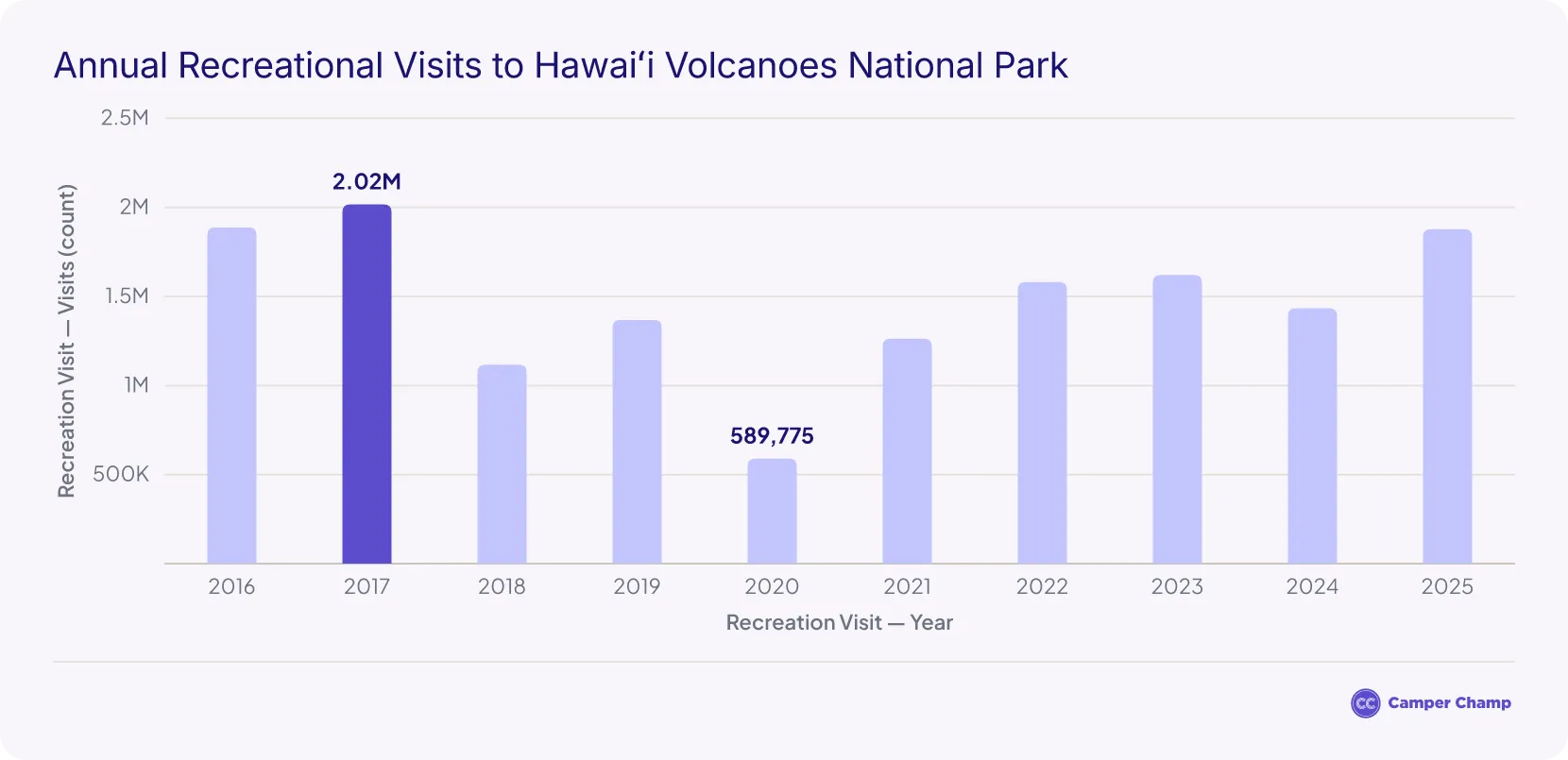
Nearly 1.88 million tourists visited Hawai’i Volcanoes National Park in 2025.
- Hawai’i Volcanoes National Park welcomed 1.37 million visitors in 2019. However, when the pandemic hit in 2020, this number dropped by 57% to 0.59 million.
- By 2021, visitor numbers began to recover, reaching 1.26 million.
- Tourist numbers increased in 2022 to 1.58 million visits, exceeding the 2019 figure, and in 2023, there was a 3% increase to 1.62 million, marking what was then the highest recorded visits since 2017.
- In 2025, visitation reached 1.88 million, up 31% from 1.43 million in 2024, reflecting a strong rebound after the previous year’s decline.
How many people visited Hawai’i Volcanoes National Park in 2026?
- As of February 2026, Hawai’i Volcanoes National Park recorded a total of 294,805 visitors, including 158,319 in January and 136,486 in February.
| 2026 Monthly Visits to Hawai'i Volcanoes NP | |
|---|---|
| Month | 2026 |
| JAN | 158,319 |
| FEB | 136,486 |
Source · Note: This data is preliminary and subject to change when updated data becomes available.
How many people visited Hawai’i Volcanoes National Park in 2025?
- In 2025, Hawai’i Volcanoes National Park welcomed a total of 1.88 million visitors, with 111,000 overnight campers and 1.77 million same-day tourists. This marked a 37% increase over the number of visitors recorded in 2019.
Hawai’i Volcanoes National Park Tourism Statistics 2020 and 2021
- In 2020, Hawai’i Volcanoes National Park visitor numbers fell to 589,775 due to the coronavirus pandemic. This marked a decrease of 57% from the 2019 figure of 1.37 million. In 2021, there was a 113% increase compared to 2020, with 1.26 million visits.
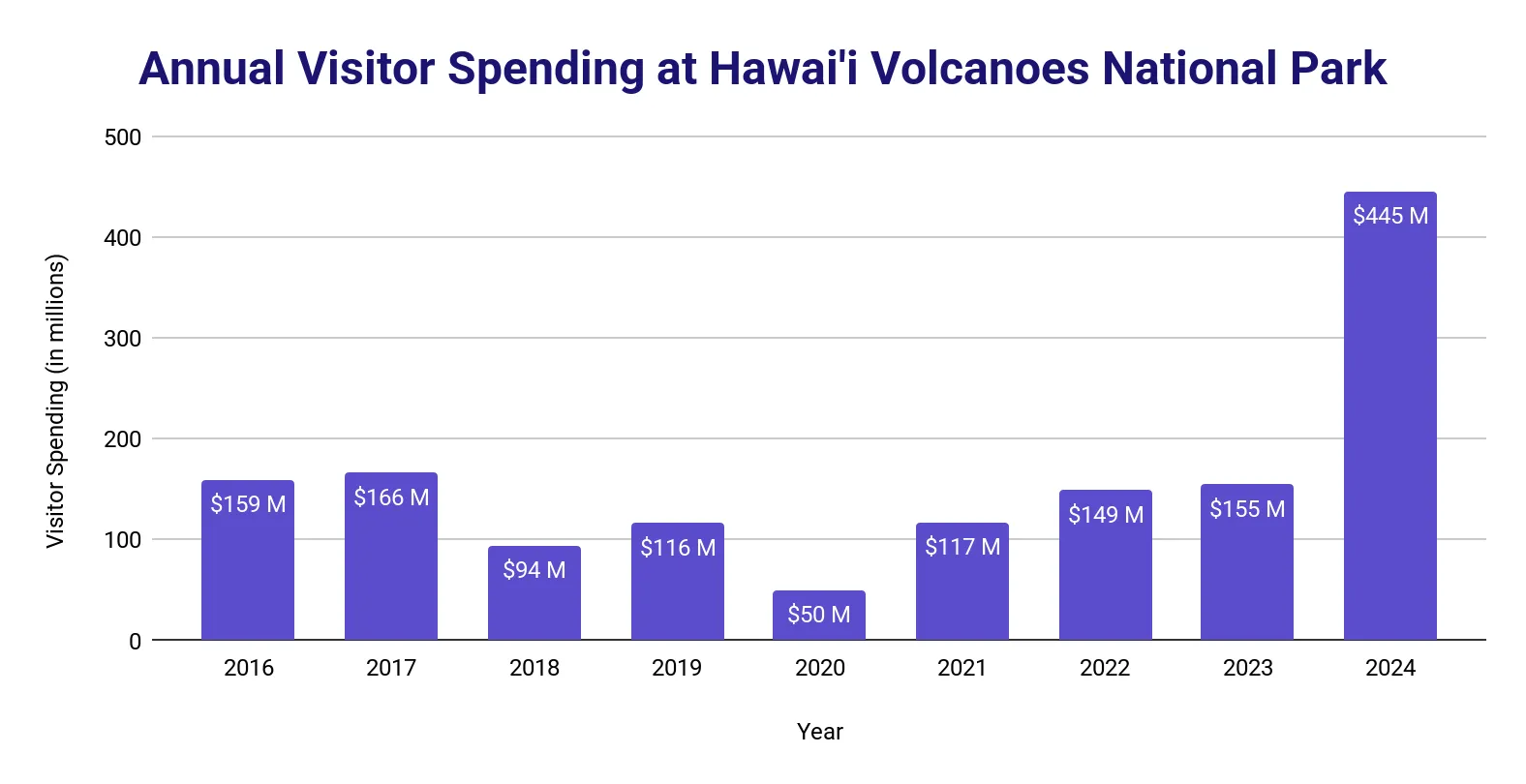
- Tourist spending followed a similar trend. After 2019’s expenditure figure of $116.46 million, tourist spending dropped to $50.22 million in 2020, showcasing a drop of over 56%. However, in 2021, visitor spending reached $117.16 million, exceeding the 2019 tourist expenditure by 1%.
How much do visitors spend at Hawai’i Volcanoes National Park every year?
In 2024, visitor spending at Hawai’i Volcanoes National Park reached $445 million, highlighting the park’s growing economic impact and the strength of Hawai’i tourism.
- In 2019, visitors to Hawai’i Volcanoes National Park generated $116.46 million in expenditure. However, in 2020, visitor spending dropped by 56% to $50.22 million.
- Hawai’i Volcanoes National Park recovered in 2021, with $117.16 million spent by tourists.
- In 2022, tourist spending amounted to $148 million, and in 2023, this increased by 4% to $154.60 million. This growth highlighted a steady recovery, showcasing a 33% rise compared to the spending levels in 2019.
- In 2024, visitor spending climbed to $445 million, up 187% from $155 million in 2023.
Note: The sharp increase in 2024 visitor spending is largely due to updated National Park Service methodology using new park-specific visitor spending data. NPS also says the new local survey found that Hawai'i Volcanoes visitors spend more time and money than the old generalized assumptions suggested. In the park’s 2024 release, about 80% of visitors stayed overnight in local lodging, spent an average of $763 per group per night, and overnight visitors averaged 6.4 nights on the Island of Hawai'i.
How much did tourists spend in Hawai’i Volcanoes National Park in 2024?
- Visitors to Hawai’i Volcanoes National Park spent almost $445 million in 2024, exceeding the pre-pandemic spending levels by 282%.
Note: NPS also found that many Hawai'i Volcanoes visitors stay overnight and spend more on lodging, which helped raise the 2024 spending estimate. Visitors stayed an average of 6.4 nights, spent about $763 per group per night, and 24% said the park was the main reason for their trip.
How much does it cost to visit Hawai’i Volcanoes National Park?
- A visit to Hawai'i Volcanoes National Park costs $30 per private vehicle, $25 per motorcycle, or $15 per person on foot or bicycle, and each entrance pass is valid for 7 days.
- For travelers planning a longer trip, the Hawai'i Tri-Park Annual Pass costs $55. While the entrance fee is affordable, the National Park Service says overnight visitors to Hawai'i Volcanoes National Park spent an average of $763 per group per night and stayed 6.4 nights on the Island of Hawai'i, showing that total trip costs are usually much higher than the park entry fee alone.
How popular is Hawai’i Volcanoes National Park?
- Hawai’i Volcanoes National Park's "Earth, Sea, Sky" education program received the National Park Service’s top "Excellence in Education" award for its outstanding contributions to educational initiatives.
- Hawai’i Volcanoes National Park ranked 19th as the most visited national park in the U.S.A. in 2025.
- Read more about the U.S. National Park Ranking.
When is the best time to visit Hawai’i Volcanoes National Park?
- The best months to visit Hawai'i Volcanoes National Park are June, July, August, and December to February because these are the driest months, offering ideal weather conditions for exploring the park’s trails and volcanic landscapes.
- The best time to visit Hawai'i Volcanoes National Park is early in the morning, before 10 a.m., to avoid crowds and enjoy popular spots like Nāhuku (Thurston Lava Tube) and the Kīlauea Iki Trail.
- For a quieter experience and to see the summit eruption glow, plan your visit either before sunrise or after 9 p.m., when most visitors have left. The park is open 24 hours a day.
Peak Tourist Months at Hawai’i Volcanoes National Park
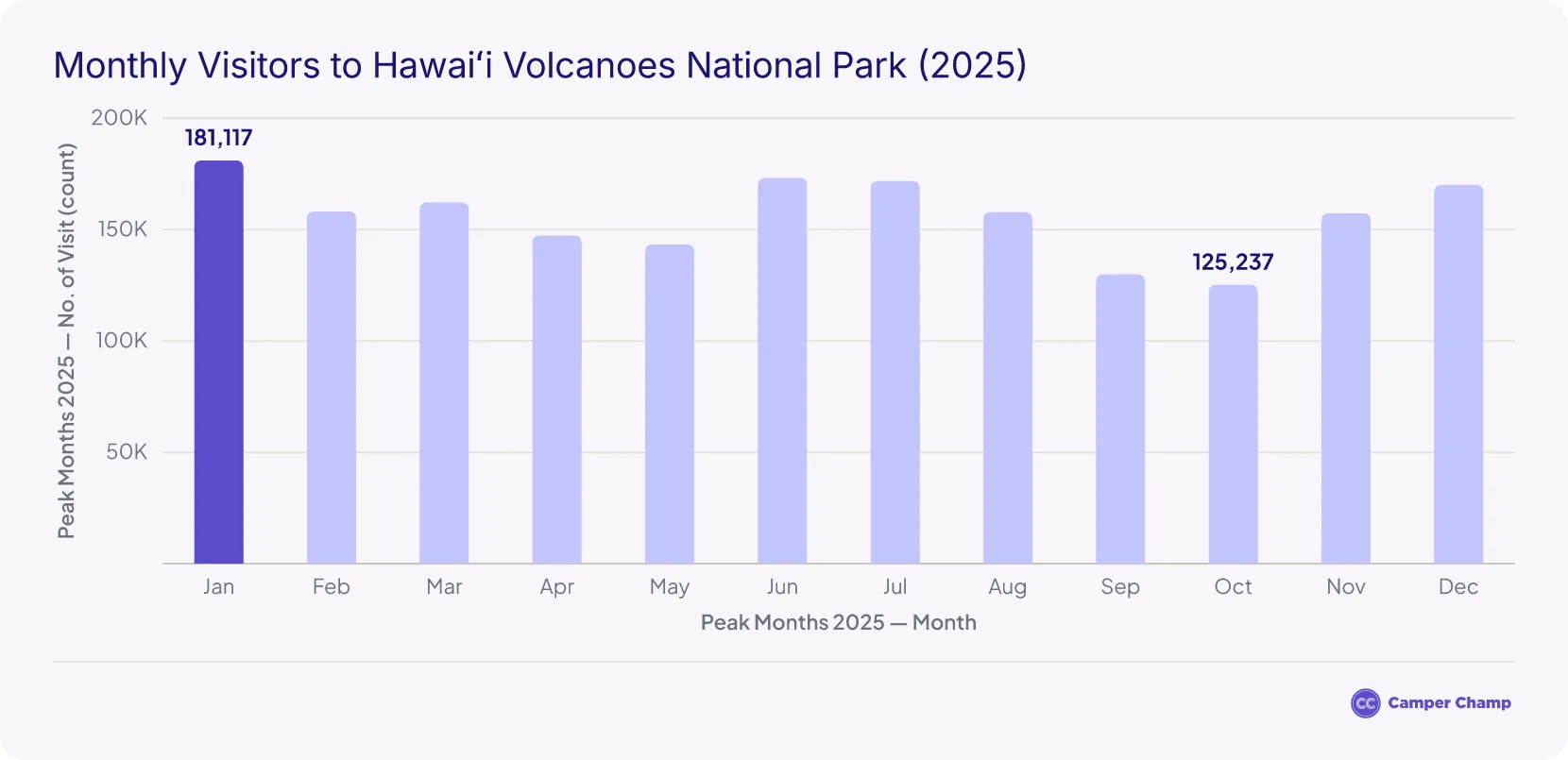
- January was the busiest month for Hawai'i Volcanoes National Park, attracting 181,000 visitors. The surge is driven by the holiday season and favourable weather, making it an ideal time for tourists to explore the park.
- June saw 173,000 visitors, benefiting from the summer vacation period and excellent weather, drawing families and outdoor enthusiasts looking to make the most of their time in nature.
- July, with 172,000 visitors, remained a peak month, as the summer break continued, offering warm, dry conditions perfect for hiking and sightseeing.
- February welcomed 158,000 visitors, as cooler weather and fewer crowds made it an appealing time for travellers seeking a quieter experience.
- August drew 158,000 visitors, as tourists took advantage of the last stretch of summer, enjoying the dry season before the school year began.
How many people camp at Hawai’i Volcanoes National Park?
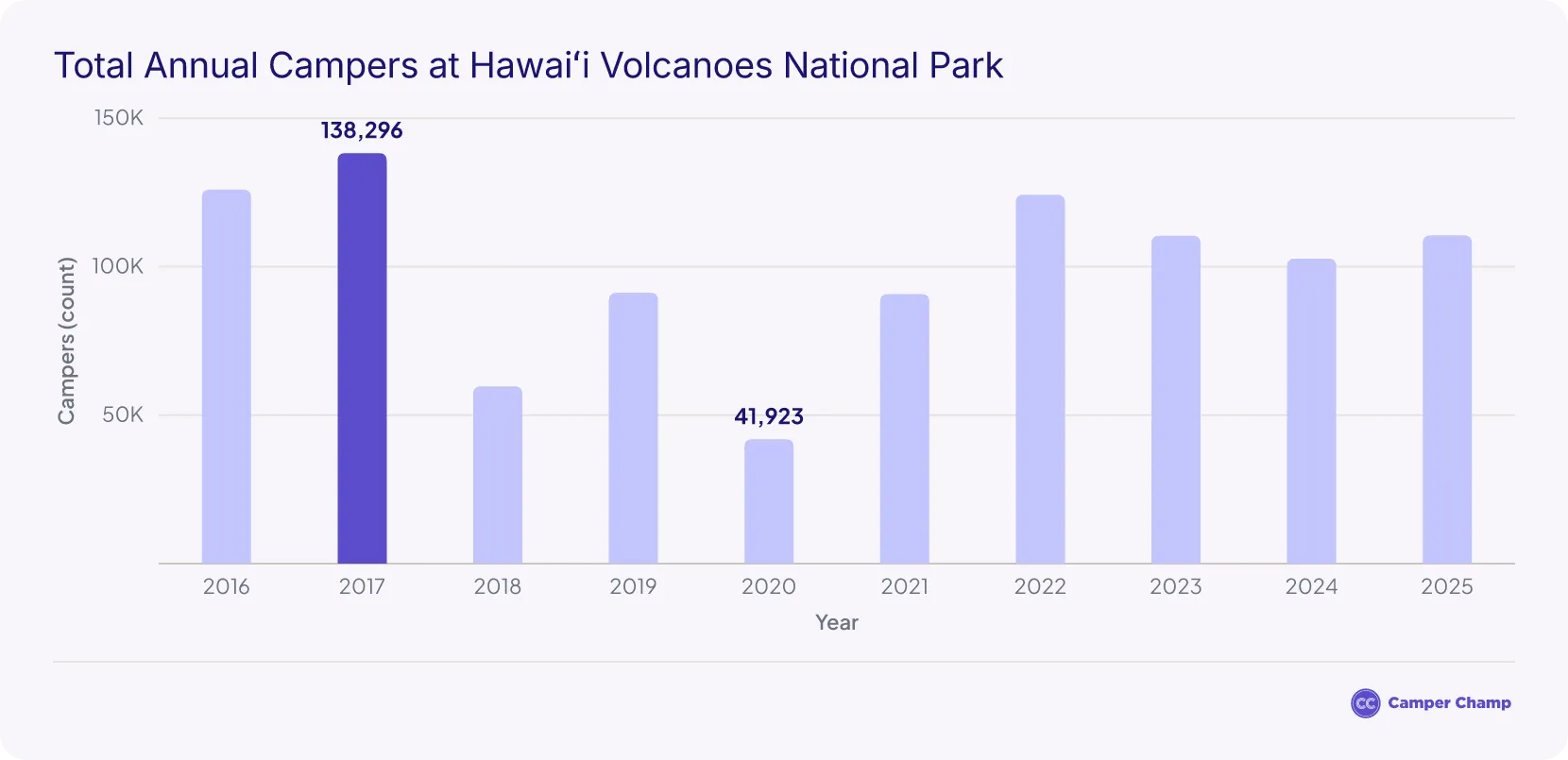
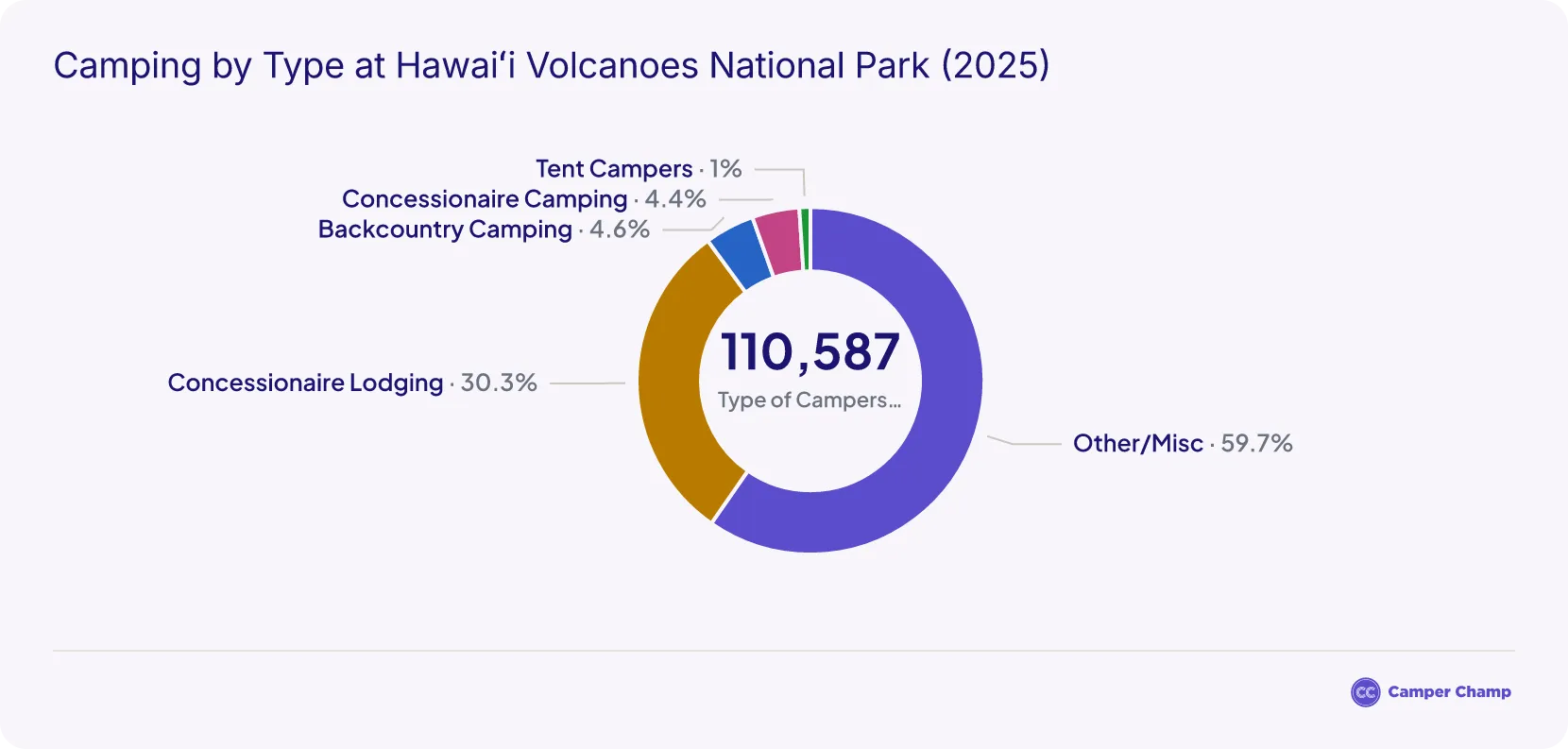
About 110,600 people camped at Hawai’i Volcanoes National Park in 2025.
- Hawai’i Volcanoes National Park welcomed 91,200 campers in 2019. However, when the pandemic hit in 2020, this number dropped by 54% to 41,900.
- By 2021, annual camping numbers at Hawai’i Volcanoes National Park began to recover, reaching 90,800.
- Camping visits increased in 2022 to 124,300, exceeding the 2019 figure, and in 2023, there was an 11% decrease to 110,500.
- In 2025, annual camping at Hawai’i Volcanoes National Park reached 110,600, up 8% from 102,800 in 2024.
Most Popular Types of Camping at Hawai’i Volcanoes National Park 2025
- Concessionaire Lodging (33,480 visits) – Also known as glamping, this was one of the most popular options, with many visitors opting for comfortable lodging accommodations provided by third-party operators.
- Concessionaire Camping (4,870 visits) – A notable number of visitors preferred concessionaire camping, which combines the outdoor experience with the added benefits of managed services and amenities.
- Backcountry Camping (5,120 visits) – Backcountry camping appeals to those seeking a more remote and challenging outdoor adventure, though it attracts a smaller group of visitors compared to more structured options.
- Tent Campers (1,130 visits) – Tent camping was less popular.
- Other/Misc (65,980 visits) – This catch-all category was the most popular, representing the largest share of camping-related visits in the dataset.
Hawai’i Volcanoes National Park Facts
- Largest Active Volcano: The park is home to Mauna Loa, the largest active volcano on Earth.
- World Heritage Site: It is a UNESCO World Heritage Site and an International Biosphere Reserve, recognised for its natural and cultural significance.
- Diverse Ecosystem: The park features a unique mix of volcanic landscapes, tropical rainforests, and diverse wildlife.
- Historical Significance: Polynesians were the first settlers, and the park has a rich cultural history.
- Volcanic Activity: Kilauea, one of the world's most active volcanoes, continuously shapes the landscape.
Other Resources
- Acadia National Park Tourism Statistics
- Badlands National Park Tourism Statistics
- Big Bend National Park Tourism Statistics
- Biscayne National Park Tourism Statistics
- Everglades National Park Tourism Statistics
- Grand Teton National Park Tourism Statistics
- US National Parks Ranking
- Rocky Mountain National Park Tourism Statistics
- US National Parks Statistics
- Voyageurs National Park Tourism Statistics
- Yosemite National Park Tourism Statistics
- Zion National Park Tourism Statistics
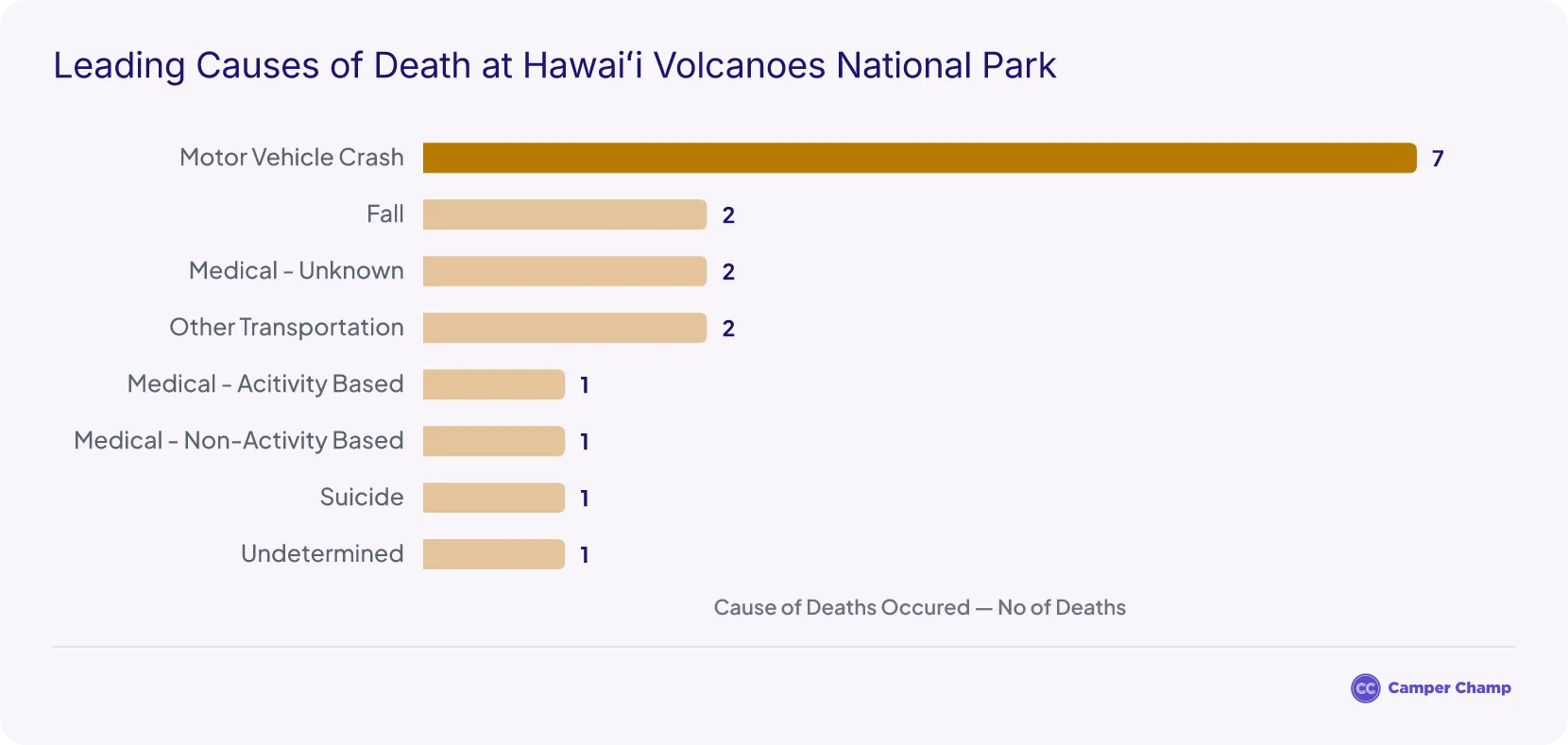
What are the most common causes of death in Hawai’i Volcanoes National Park?
There were 17 recorded deaths in Hawai’i Volcanoes National Park from January 2007 to August of 2024.
- Motor Vehicle Crash (7 deaths)
- Falls (2 deaths)
- Medical Emergency - Unknown (2 deaths)
- Other Transportation-Related Deaths (2 deaths)
- Medical Emergency During Physical Activity (1 death)
- Medical Emergency Not During Physical Activity (1 death)
- Suicide (1 death)
Hawai’i Volcanoes National Park Safety Tips
Visitors are key in protecting the park's wildlife, natural resources, and historical sites. To ensure safety and preserve the park's environment, follow these guidelines:
- Stay on Marked Trails: Volcanic terrain can be hazardous, with unstable cliffs, cracks, and dangerous gases. Avoid closed areas.
- Prepare for Weather: The park can be chilly at higher elevations. Wear appropriate clothing and bring water.
- Driving Safety: Slow down, stay alert, and watch for pedestrians and wildlife.
- Wildlife Caution: Keep a safe distance from animals and never feed them.
- Hiking: Wear sturdy shoes, stay hydrated, and know your limits.
RV rental in the USA
- Atlanta RV rental
- RV rental in Boston
- RV rental in Chicago
- RV rental in Cincinnati
- Colorado RV rental
- Denver RV rental
- RV rental in Florida
- RV rental in Los Angeles
- San Diego RV rental
- RV rental in San Jose
References
- National Parks Key Tourism Trends and Mortality Statistics · irma.nps.gov